
Table of Contents
- Where to Buy Trendy Kids Clothes: What Actually Matters in 2026
- Trendy Kids Clothing Brands: What Separates a Good One From a Gimmick
- Stylish Kids Clothes Online: How to Judge Quality Before You Check Out
- Kids Clothing Boutiques vs Big-Box Stores: Which Fits Your Family
- Tees, Hoodies and Layers: What to Buy for Each Age and Season
- Kids Clothing Shopping Tips: Sizing, Fabric and Returns
- Where to Buy Trendy Kids Clothes: Final Verdict
- Frequently Asked Questions
Last Updated: October 5, 2026
Where to Buy Trendy Kids Clothes: What Actually Matters in 2026
Finding trendy kids clothes that survive a wash cycle, a playground, and a picky eight-year-old is harder than it should be. Parents buy something cute, it shrinks or fades, and the kid refuses to wear it twice. This guide breaks down where to shop, what to check before you buy, and how to build a wardrobe that actually gets worn.
The first thing to understand is that trendy kids clothes fall into two very different buckets. Some pieces are designed for a photo and a single wear. Others are built for the daily rotation, the school run, the birthday party, and the hand-me-down pile. Knowing which one you are buying changes everything about where you shop and what you pay.
U.S. Consumer Product Safety Commission guidance on children's apparel safety
Trendy Kids Clothing Brands: What Separates a Good One From a Gimmick
A good kids' clothing brand does three things well: it gets sizing right, it prints or dyes in a way that survives washing, and it designs for how children actually move. A gimmick brand does the opposite. It leans on a viral print, cuts corners on fabric weight, and relies on parents not reading the care label.
Here is how we separate the two when we look at any kids' clothing range:
- Fabric weight and blend. Midweight cotton (around 5.3-6.0 oz/yd²) and cotton-poly blends hold shape better than thin, single-ply knits. A shirt listed as combed ring-spun cotton at a stated fabric weight is telling you it is softer and more durable than a generic "100% cotton" listing with no weight given.
- Print method. Direct-to-garment (DTG) and direct-to-film (DTF) prints hold color longer than cheap heat transfers that crack after a few washes.
- Construction details. Side seams, shoulder tape, and ribbed collars are the quiet signals of a shirt built to last. A lack of side seams often means a tubular knit that twists after washing.
- Label type. Tear-away and printed labels reduce the itch complaints that make kids refuse a shirt.
- Size consistency. A brand that runs true to size saves you the guesswork on every reorder.
That last point matters more than most parents realize. When sizing is consistent across a range, you can buy the next size up with confidence instead of measuring and hoping.
A unique angle: the hand-me-down test. One of the most practical ways to judge a kids' clothing brand is to ask whether its pieces survive multiple children. Brands that use reinforced seams, colorfast dyes, and durable prints often produce clothes that can be passed down.
Federal Trade Commission guidance on textile and care labeling
Stylish Kids Clothes Online: How to Judge Quality Before You Check Out
Judging quality online comes down to reading the product page like a spec sheet, not a mood board. The photos sell the look; the details tell you whether it survives real life.
Start with the fabric description. A shirt listed as combed ring-spun cotton at a stated fabric weight is telling you it is softer and more durable than a generic "100% cotton" listing with no weight given. Then check the construction notes: side seams, shoulder tape, and a ribbed knit collar all point to a garment that keeps its shape.
Care instructions are your next clue. A tee that calls for cold wash and low tumble dry is usually a tee that was made to hold up, because the brand expects you to wash it often. A piece with vague or missing care guidance is a warning sign.
Federal Trade Commission guidance on textile and care labeling
Kids Clothing Boutiques vs Big-Box Stores: Which Fits Your Family
Boutiques and big-box stores solve different problems. A boutique, whether online or on the high street, tends to carry a tighter, more curated range with stronger design identity. Big-box stores win on volume, price, and the ability to grab socks, jeans, and a birthday gift in one trip.
The trade-off is real in both directions. Boutique pieces often cost more per item. Big-box basics are cheap and replaceable, but the prints and cuts can feel generic, and quality varies wildly between lines.
For most families, the answer is not either-or. We recommend building the core of the wardrobe from durable everyday pieces and layering in a few boutique statement items for birthdays, photos, and occasions where the outfit actually matters.
A comparative buying guide: how to choose where to shop. Here is a framework based on price tier, fit consistency, shipping, and sustainability.
| Shopping Route | Price Tier | Fit Consistency | Shipping & Returns | Sustainability Angle | Best For |
|---|---|---|---|---|---|
| Online boutique | Higher per item | Varies; check size charts | Often free over a threshold; returns may be limited | Often smaller batches, less waste | Statement pieces, gifts |
| Big-box store | Low to mid | Inconsistent between lines | Free in-store pickup; generous returns | Mass production, higher waste | Basics, socks, staples |
| Brand direct site | Mid to high | Usually consistent | Shipping wait times; returns may be restricted | Can offer transparency on materials | Reorders, core wardrobe |
| Local boutique | Mid to high | Can try on in person | No shipping; returns at store | Supports local economy | Occasion outfits |
Price ranges and value comparisons. While exact prices vary, you can generally expect big-box basics to cost less per item, while boutique and direct-to-consumer brands charge more but often deliver better durability.
Sizing consistency and fit. Big-box stores often have inconsistent sizing across their own lines, so you may need to measure your child each time. Boutiques and direct-to-consumer brands tend to have more consistent sizing, which makes reordering easier.
Kids Graphic Tee "Walabookies" Colorful Character Shirt →
Sustainability and ethical production. Boutiques and direct-to-consumer brands are more likely to use organic cotton, recycled materials, or ethical production practices. Big-box stores are improving, but mass production still has a larger environmental footprint.
Inclusive styles and accessibility. Some children have sensory sensitivities or need adaptive features. Boutiques and specialty online retailers are more likely to offer sensory-friendly fabrics (like tagless, seamless, or extra-soft materials) and adaptive designs (like magnetic closures or easy-on loops).
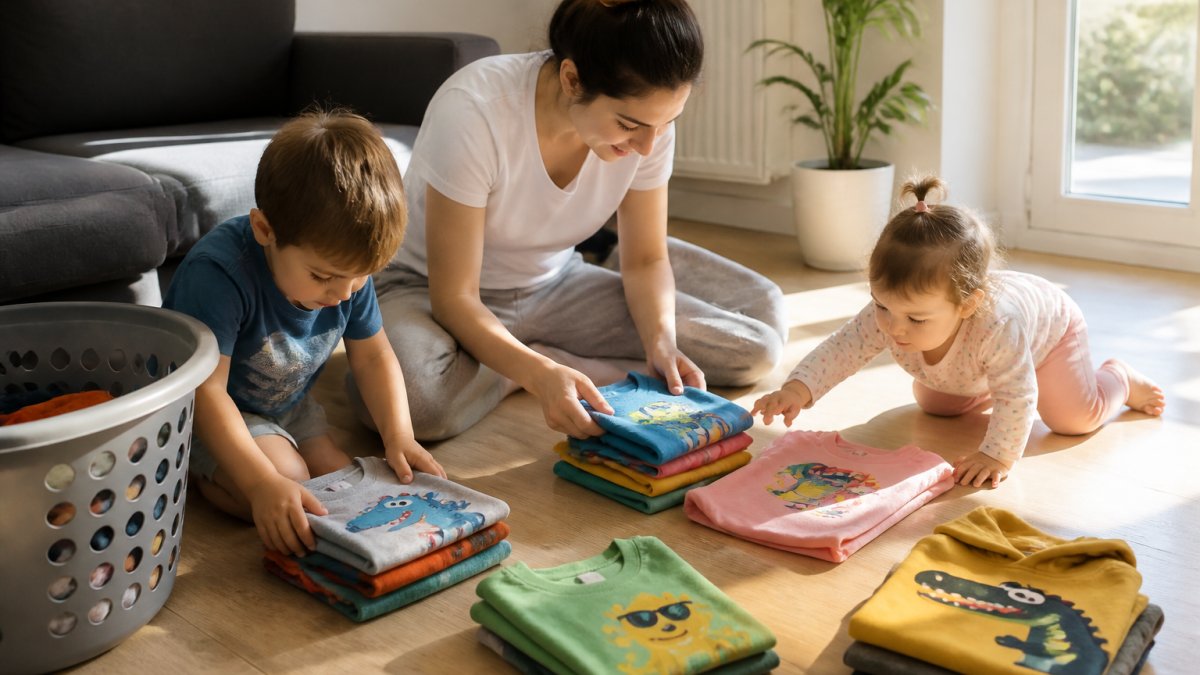
Tees, Hoodies and Layers: What to Buy for Each Age and Season
Age and season should drive what you buy, not the other way around. Toddlers need softness and easy changes. Older kids need pieces they feel cool wearing, or they will not put them on.
For toddlers, prioritize soft cotton and simple fastenings. Our Toddler Long Sleeve Tee uses a lightweight cotton blend with ribbed cuffs and a reinforced neckline, and the tear-away label helps with kids who complain about tags. For cooler mornings, the Wacky Kids Toddler Hoodie adds warmth without bulk, with a jersey-lined hood and side pockets.

For older kids, layers do the heavy lifting. A graphic tee works alone in summer and under a hoodie in autumn. The Kids' Hooded Sweatshirt is a midweight cotton-poly fleece with a kangaroo pocket, and it runs true to size, which takes the guesswork out of reordering.


For kids in sports or school teams, an athletic layer helps. The Youth Competitor Tee is a moisture-wicking polyester tee with an athletic cut and a tear-away label.
Kids Clothing Shopping Tips: Sizing, Fabric and Returns
Good kids clothing shopping tips all come back to three things: measure, read the fabric, and know the return policy before you pay.
Measure your child rather than guessing from age. Sizes vary between brands, and a quick chest and length measurement against the site's size chart prevents most bad purchases. Our Kids Graphic Tee lists exact width and length measurements per size, so you can match them to a shirt that already fits.
On fabric, favor combed ring-spun cotton, cotton-poly blends, and stated fabric weights over vague listings. On returns, check the window and whether sale items are covered before checkout, because kids' clothing is one of the categories where fit issues are most common.
- Measure chest and length, then compare to the size chart
- Note the fabric weight and blend
- Confirm the care instructions match your routine
- Check the return window and whether sale items qualify
- Save the size chart for future reorders
Where to Buy Trendy Kids Clothes: Final Verdict
The best place to buy trendy kids clothes is wherever the sizing is consistent, the fabric holds up, and the prints survive the wash. Our collection at Walabookies is designed to bring fun and joy to your little ones, with quality and style in every item.
American Academy of Pediatrics guidance on children's clothing and comfort
Start with the pieces that get worn weekly, add a few statement items for occasions, and you will spend less and stress less every season.
Frequently Asked Questions
What clothes are trending for kids right now?
Graphic tees with bold cartoon prints, midweight hoodies and matching family sets lead the way in 2026. Parents are also leaning toward pieces that work for both school and weekends, like long-sleeve tees that layer under jackets. Look for playful character artwork on everyday basics, since those get worn far more often than occasion-only outfits. Coordinating sets and bright, unisex colors are also popular because they simplify getting dressed in the morning.
Where can I find stylish kids' clothes online?
Start with shops that publish full size charts, fabric weights and care instructions on each product page. That detail tells you more about quality than any lifestyle photo. Walabookies, for example, lists measurements down to sleeve length on its graphic tee and youth competitor tee, which helps you pick the right size first time. Read the return policy before ordering, and check whether reviews mention shrinking or fading after washing.
What should I look for when buying kids' clothes?
Check four things: fabric weight, seam construction, label type and size range. Heavier fabrics like an 8.0 oz/yd² cotton-poly fleece hold shape better than thin knits, while side seams and shoulder tape stop tees from twisting in the wash. Tear-away labels reduce itching for kids with sensitive skin. Also confirm the size range covers your child's age, since a brand that stops at size 5 will not work for a 10-year-old.
How do I choose comfortable, durable clothes for kids?
Prioritize breathable natural fibers for everyday wear and blended fabrics for warmth. A lightweight combed cotton tee suits active toddlers, while a 60% cotton, 40% polyester fleece hoodie adds warmth without bulk. Wash cold and tumble dry low to protect prints and shape. Reinforced cuffs, ribbed collars and coverstitching are the details that survive repeated washing and pass down to younger siblings.
What are good places to shop for children's clothing besides big-box stores?
Smaller online boutiques often carry more distinctive prints and give you clearer product specifications than mass retailers. A boutique that lists fabric weight, certification and care instructions is generally a safer bet than one showing only model photos.
Kids outgrow clothes faster than they wear them out, and the wrong fabric or fit makes that worse. Walabookies offers a curated selection of kids' merchandise built for playful, everyday wear, with consistent sizing, durable prints, and pieces designed to move with your child. Continue shopping with Walabookies and find the pieces your kids will actually reach for.