
Table of Contents
- How to Determine Kids Clothing Size Online
- How to Buy Premium Organic Cotton Kids Apparel Without Getting Burned
- Vetting a Kids' Clothing Store Before You Check Out
- Return Policies, Shipping Costs, and the Real Cost of a Bad Fit
- Building a Capsule Wardrobe That Survives Growth Spurts
- Sustainability, Resale, and Making Kids Clothes Last Longer
- Budgeting for Kids Clothes Online: Discount Codes, Sales, and Value for Money
- Frequently Asked Questions
Last Updated: September 17, 2026
How to Determine Kids Clothing Size Online
Buying kids clothes online starts with the tape measure, not the shopping cart, and that is exactly where buying kids clothes online should begin. Get the measurements right at home and you avoid most of the returns hassle that makes parents swear off online shopping.
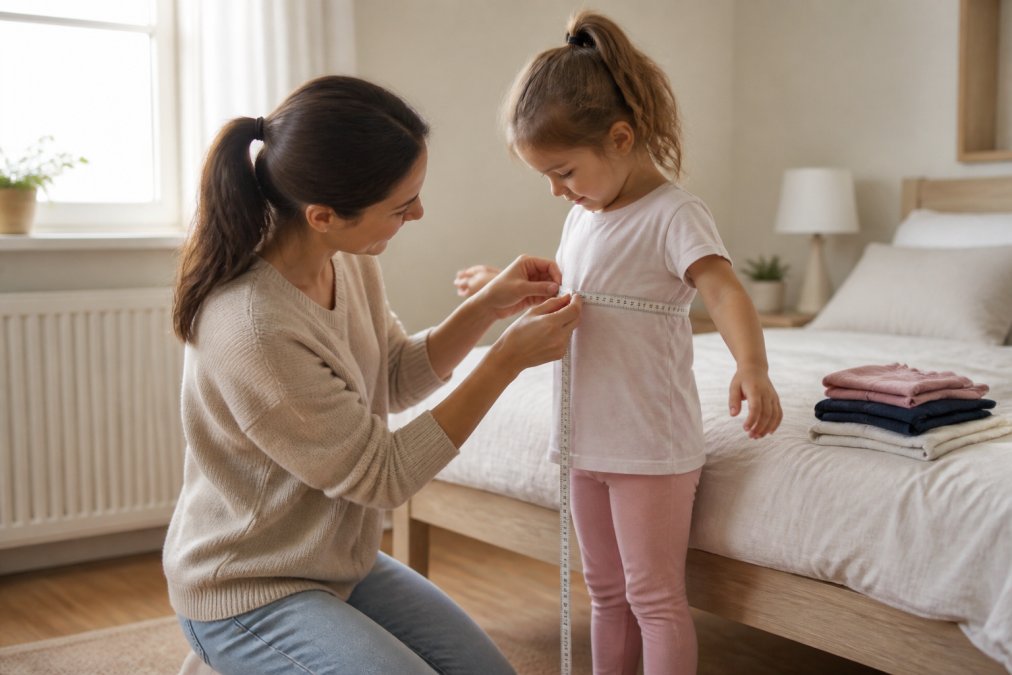
Measuring Your Child at Home
Use a soft measuring tape over lightweight clothing, not bulky sweaters. Take three numbers: chest, waist, and height. For infants and toddlers, add head circumference if you're buying tops with tight necklines.
Reading Size Charts and Handling Growth Spurts
Every retailer's size chart is different, and that's not a design flaw. It's a fit philosophy. Some brands cut generously for layering; others run slim for a closer fit.
How to Buy Premium Organic Cotton Kids Apparel Without Getting Burned
Premium kids' apparel is worth the money only when fabric and construction back it up. A high price tag on thin cotton is just marketing.
Checking Fabric Composition and Durable Construction
Every product page lists the fabric weight, fiber blend, and construction details, so you're not guessing based on a photo.
Vetting a Kids' Clothing Store Before You Check Out
Before you add anything to the online shopping cart, spend two minutes checking whether the store is real and reliable. Retailer reputation matters more in kids' fashion than almost any other category, because sizing errors and quality issues are common, and children grow out of a bad purchase before you can justify returning it.
Step 1: Verify the business is real
Scroll to the footer. You want a physical mailing address, a business registration number or VAT/EIN where applicable, and a working phone or contact form. A store listing only a Gmail address and a contact form isn't automatically a scam, but it has no accountability if something goes wrong.
Step 2: Read the product page like an editor, not a shopper
A trustworthy kids' clothing listing contains four things a stock-photo store cannot fake:
- Garment measurements in inches or centimeters, not just S/M/L. If a page only shows labeled sizes, you are guessing.
- Fabric weight (GSM or oz/yd²) and fiber blend percentages. "Soft cotton" is marketing; "180 GSM 100% combed ring-spun cotton" is a specification.
- Construction details, ribbed collar, shoulder tape, side seams, reinforced neckline. These are the features that determine whether a tee survives twenty washes.
- Real photography on a real child, ideally with multiple angles. Identical white-background mockups across dozens of listings usually mean the seller has never handled the product.
Step 3: Read reviews in the right order
Do not start with the five-star reviews, they are the least informative. Read three-star reviews first, then one-star, then skim the five-star ones for repeated phrases. Three-star reviews tend to be the most honest: the buyer liked the product but hit a specific snag and describes it precisely. Look for repeated mentions of shrinkage, color fading, fit running small or large, and shipping delays.
Step 4: Confirm the return policy before checkout
A visible return policy is a trust signal. One buried three clicks deep in a footer, or requiring an email to support to learn the terms, is a warning. Check the return window, who pays return shipping, and whether exchanges are free, the next section covers weighing those terms against price.
Red flags that should end the visit
- No physical address anywhere on the site
- Product pages with no measurements, only model photos
- Reviews that are all five stars, posted within the same week, with generic language
- A return policy that excludes sale items without saying so on the product page
- Prices that are dramatically below every other retailer for the same branded item
How to check a retailer's reputation and report a problem
Return Policies, Shipping Costs, and the Real Cost of a Bad Fit
The true cost of kids' clothing is not the price tag. It is the price tag plus return shipping plus the time spent repacking and reordering, and, if the item doesn't fit, the replacement you buy while the return is in transit.
The four clauses that determine what a return really costs
- The return window. Thirty days is standard for kids' clothing; fourteen days is tight, especially if you are ordering ahead for a growth spurt. Count from the delivery date, not the order date, some retailers count from shipment, which can shave a week off your effective window.
- Who pays return shipping. Free returns are the single biggest differentiator. A store that charges a flat return label fee effectively adds that amount to the cost of every item you are unsure about. On a $22 tee, a $7 return label is a 32% surcharge.
- Restocking fees. Some retailers deduct a percentage, commonly in the 10-20% range, from your refund on non-defective returns. This is rare in kids' fashion but common in discount apparel, and it is usually buried in the policy page.
- Exchange vs. refund. Free exchanges are worth more than free returns if you are confident about the brand's sizing. If you are trying a new brand, a refund is safer because you may not want a replacement in a different size.
The real cost math of a bad fit
Run the numbers on a single order: a $25 kids' tee, a $6 return label, and a $4 restocking fee means a failed fit costs $10 and a week of your time, 40% of the item's price, gone. Multiply that across a seasonal order of eight items and a 30% fit-failure rate, and you're losing real money to sizing uncertainty.
Shipping thresholds and consolidation
Shipping costs add up fast on multiple orders. If you're buying for two kids in different sizes, consolidate into one order where possible. Many stores offer free shipping above a threshold, often $50-$75, so a single larger order frequently costs less than two small ones, even with a few items you're unsure about.
The longevity angle most guides miss
Track your spending across a season, not per order. Parents who plan ahead, measuring accurately, buying from stores with free returns, and choosing pieces with resale value, typically spend less than those who buy reactively when something no longer fits.
Building a Capsule Wardrobe That Survives Growth Spurts
A capsule wardrobe for kids is a small set of mix-and-match pieces that covers most days without overflow. Fewer, better pieces beat a closet full of clothes that fit for one season.
Sustainability, Resale, and Making Kids Clothes Last Longer
Kids' clothing has a sustainability problem: it's worn briefly and discarded quickly. Two habits fix most of it.
Budgeting for Kids Clothes Online: Discount Codes, Sales, and Value for Money
Smart budgeting for kids' clothes means timing purchases around sales and buying quality where it counts. Discount codes and seasonal sales help, but price comparison across stores is where the real savings live.
| Strategy | When to Use It | Impact on Cost |
|---|---|---|
| Seasonal sales | End of season, next size up | 20-40% off typical pricing |
| Discount codes | Newsletter signup, first order | Small but stackable savings |
| Capsule wardrobe | Start of each season | Fewer pieces, more outfits |
| Resale platforms | Outgrown but good condition | Recovers part of original spend |
Frequently Asked Questions
How do I accurately measure my child for online clothing purchases?
Use a soft measuring tape and measure three spots: chest at the widest point, waist at the natural bend, and height from floor to top of head. Write the numbers down and compare them to the retailer's size chart rather than guessing from your child's age. Kids' sizes vary between brands, so a 4T from one store may fit like a 5T elsewhere. Measure every few months, since growth spurts can shift sizing quickly.
What should I look for when buying premium organic cotton kids apparel?
Check the fabric composition on the product page, not just the marketing copy. Look for 100% combed ring-spun cotton or a stated organic certification, plus details like ribbed collars, shoulder tape, and side seams that help garments hold shape after washing. Washability matters too: cold machine wash and low tumble dry instructions usually signal fabric built to last. If a listing skips material details entirely, that is a red flag for buying kids clothes online.
What are the best tips for buying clothes that kids won't outgrow in a month?
Buy for the season ahead, not the size your child wears today. Check garment measurements in centimetres against your child's current numbers, and size up when a chart shows your child near the top of a range. Stretch-friendly pieces like ribbed cuffs and elastic waistbands extend wear time. A small capsule of mix-and-match staples in slightly roomy sizes usually outlasts a pile of exact-fit items that get outgrown mid-season.
How do I handle returns and exchanges for online children's clothing?
Read the return policy before you add anything to your online shopping cart. Confirm the return window, who pays shipping costs, and whether sale items are excluded. Keep tags attached and hold onto packaging until your child has tried the item on. If a store's policy is vague or buried, that tells you something about how easy a return will be. Stores with clear, generous policies are worth paying a little more for.
Buying kids clothes online comes down to measurement, material, and timing. Get those three right and you'll stop guessing. Walabookies offers a curated range of playful kids' apparel with clear fabric details, tear-away labels, and construction built to survive real wear. Browse the collection and find pieces your kids will actually want to put on.