
Table of Contents
- Why Do Kids' Clothes Fall Apart So Fast? The Real Reasons
- Fabric Failures: Shrinking, Fading, and Pilling
- Construction Flaws: Seam Allowance and Stitch Density
- Synthetic vs. Natural Fibers: What Holds Up Best
- How to Repair Holes in Kids' Clothes: A Step-by-Step Guide
- Best Laundry Detergents for Sensitive Baby Skin: What to Look For
- Cost-Per-Wear: Why Paying More Can Save You Money
- Conclusion: Smarter Choices for Clothes That Last
- Frequently Asked Questions
Last Updated: October 2, 2026
Why Do Kids' Clothes Fall Apart So Fast? The Real Reasons
Why do kids clothes fall apart so fast? Most children's garments are built to hit a price point, not to survive a toddler.
A garment's lifespan is decided at the factory, months before your child pulls it on. Fabric weight, stitch density, and seam construction determine whether a shirt lasts one season or three. Here's what fails, why, and how to spot the difference before you buy.
Fast Fashion and the Race to the Bottom
Fast fashion pushes new styles onto shelves weekly, and that speed comes at a cost. To keep prices low and turnover high, many brands cut fabric weight, skip reinforcement, and use the cheapest thread available, clothing designed to look good in a photo and fall apart in a laundry basket.
Bulk packs wear out fastest, and it isn't a coincidence: lower fabric weight means less tensile strength, so seams pull apart and knees blow out faster.
Thin Fabric, Weak Stitching, Short Lifespan
Two construction choices decide most of a garment's fate: fabric weight and stitch density. Lightweight fabric feels soft and costs less, but it tears at stress points.
Reinforced stitching at the shoulders, knees, and seat is one of the clearest signs a garment was built to last. When you're comparing options, run your thumb along an inside seam.
Fabric Failures: Shrinking, Fading, and Pilling
Fabric degradation shows up in three predictable ways. Shrinkage means the fabric wasn't pre-shrunk, so it contracts on the first hot wash. Fading signals weak dye penetration, common in cheaper cotton blends.
guide to fabric care and textile labeling notes that care labels reflect how a garment was tested, so following them matters more than most parents realize.
Wash cycles accelerate all three problems: hot water and high heat break down fibers faster than cold washing and air drying. Cold water and lower dryer heat won't fix bad fabric, but they slow the damage.
Construction Flaws: Seam Allowance and Stitch Density
Seam allowance is the strip of fabric between the edge and the stitch line. Too narrow and the seam rips under stress; too wide without finishing and it frays into a mess. Quality control here separates garments that survive siblings from ones that don't survive a season.
Stitch density matters just as much: more stitches per inch means a stronger seam, but too many perforate the fabric and cause tearing. Here's what to inspect before buying:
- Seams have two rows of stitching at stress points
- No loose threads or skipped stitches along hems
- Fasteners (snaps, zippers, buttons) feel secure, not wobbly
- Inside seams are finished, not raw and fraying
- Fabric feels substantial, not see-through when held to light
Synthetic vs. Natural Fibers: What Holds Up Best
The fiber content on the tag tells you a lot about how kids' clothing will age, but the real story is how fibers behave under stress, repeated washing, and the wear patterns of different ages.
Natural Fibers: Comfort with Caveats
Cotton is breathable, soft, and absorbs moisture well, ideal for sensitive skin, but it shrinks and stretches, and lacks the abrasion resistance knees and elbows need. Wool offers warmth and natural elasticity, but it's expensive and can be itchy.
Synthetic Fibers: Durability with Trade-offs
Polyester and nylon resist abrasion and hold their shape, which is why they show up in activewear and reinforced knees. They're strong and quick-drying, but trap heat, feel clammy against sensitive skin, and pill easily if fiber quality is low.
The Blend Advantage
For everyday kids' clothing, a blend often wins: a cotton-polyester mix keeps natural-fiber comfort while borrowing synthetic abrasion resistance. A 60/40 cotton-poly blend balances breathability and durability well for play clothes. For sleepwear, look for breathable natural fibers or flame-resistant synthetics that meet safety standards.
Age-Specific Fiber Needs
Different ages have different demands:
- Infants (0-12 months): Prioritize softness and washability. Pure cotton or cotton-modal blends are gentle on skin and easy to wash. Avoid heavy synthetics that trap heat.
- Toddlers (1-3 years): Abrasion resistance is critical. Look for reinforced knees and seats, often achieved with polyester blends or double-layer fabric. A cotton-poly blend in play pants can survive crawling and climbing.
- Preschoolers (3-5 years): Balance comfort and durability. Active kids need fabrics that move with them and resist repeated washing. Blends with a bit of spandex (elastane) add stretch and help garments keep their shape.
Cost-Per-Wear: The Math That Matters
A cheap shirt worn five times before it falls apart costs more per wear than a sturdier one worn fifty times. The math: a $5 shirt worn 5 times = $1 per wear; a $20 shirt worn 50 times = $0.40 per wear. Track how many wears a garment gets before it fails, then divide, the durable pieces end up costing less.
How to Test Fiber Quality in the Store
You can't always tell by touch, but these tests help:
- The stretch test: Gently pull the fabric across the chest or knees. If it distorts easily and doesn't spring back, it will lose shape fast.
- The light test: Hold the fabric up to a light source. If you can see through it clearly, it's likely too thin for heavy wear.
- The rub test: Rub the fabric between your fingers. If it pills or feels rough, it may not hold up to repeated washing.
textile durability and fiber research has documented how fiber blends influence wear resistance across repeated wash cycles.
How to Repair Holes in Kids' Clothes: A Step-by-Step Guide
Total Time: 15-20 minutes Difficulty: Beginner
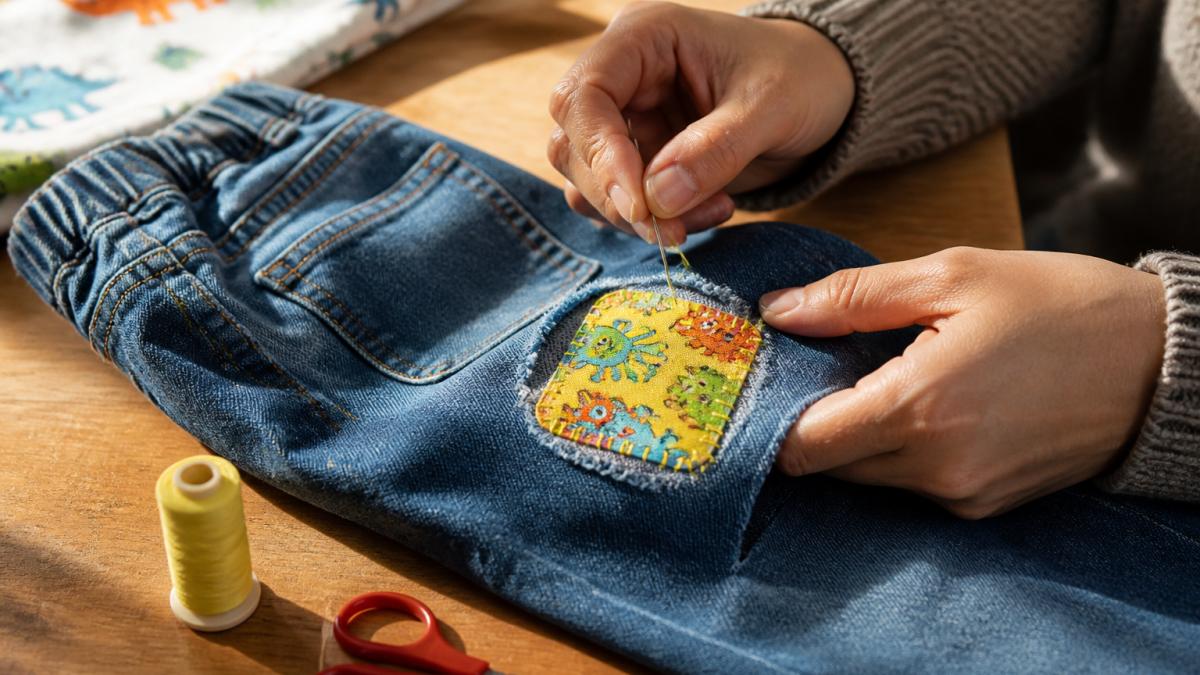
What You'll Need:
- Iron-on or sew-on patch
- Needle and matching thread
- Small scissors
- An iron (for adhesive patches)
Step 1: Trim the Damage [Time: 2 minutes] Snip away loose threads and frayed edges so the patch sits flat.
Step 4: Reinforce the Edges [Time: 5 minutes] Add a second row of stitching or a zigzag around the patch for high-stress areas like knees.
Expected Result: A reinforced repair that survives normal wear and repeated washing.
Best Laundry Detergents for Sensitive Baby Skin: What to Look For
Laundry detergent doesn't just clean clothes, it can extend a garment's life or accelerate its breakdown. For babies and toddlers with sensitive skin, residue left in fabric can cause irritation, and harsh formulas degrade fibers and finishes over time.
Detergent residue attracts and traps soil, which acts as an abrasive inside the wash drum; over many cycles that grit weakens fibers from the inside.
What to Look For (and What to Avoid)
- "Free and clear" formulas with no added fragrance or dyes, these reduce irritation risk and leave less residue.
- A short ingredient list, fewer additives means less chance of fiber degradation.
- Cold-water compatibility, heat damages both fabric and skin-friendly finishes, so a detergent that works well in cold water is a double win.
- No optical brighteners, these can make whites look clean but leave a coating that traps soil and dulls fabric over time.
- Plant-based surfactants, often gentler on fibers than harsh petrochemical surfactants, though results vary by formula.
The Over-Dosing Trap
More soap doesn't mean cleaner clothes, it means more residue. Use the amount recommended for your load size and water hardness, and run an extra rinse cycle if your child has reactive skin. Parents who switch to free-and-clear but don't adjust the dose still see irritation, because the problem is residue, not the formula.
Age-Specific Laundry Tactics
Different ages mean different wear patterns, so adapt your routine:
- Infants (0-12 months): Focus on softness and washability. Onesies and sleepers get washed after every wear, so choose a gentle detergent that rinses clean and avoid fabric softener, which coats fibers and reduces absorbency.
- Toddlers (1-3 years): Abrasion resistance matters more. Knees and seats take a beating, so pre-treat stains and grime before washing to prevent soil from working into fibers. Use a detergent that suspends dirt well in cold water.
- Preschoolers (3-5 years): Play clothes face outdoor grit and repeated washing. Consider a detergent with enzymes for stain removal, but check that it's safe for sensitive skin if your child is prone to eczema.
A Quick In-Store Fabric Test for Parents
Before you even get to the detergent, test a garment's likely durability in the store. Stretch test: pull the fabric across the chest or knees, if it distorts easily and doesn't spring back, it will lose shape fast. Light test: hold it up to a light source, if you can see through it clearly, it's too thin for heavy wear.
Cost-Per-Wear: Why Paying More Can Save You Money
Cost-per-wear is the price of a garment divided by the number of times it's worn. A cheap shirt worn five times before it falls apart costs more per wear than a sturdier one worn fifty times.
Run the numbers on your own closet: track how many wears a garment gets before it fails, then divide. Most families find the "expensive" pieces they hesitated over end up cheaper over a year.
consumer guidance on textile waste and clothing longevity highlights how extending a garment's life reduces textile waste, which is a side benefit of buying for durability.
Conclusion: Smarter Choices for Clothes That Last
Kids destroy clothes, and most clothing is built to be destroyed. The fix is buying smarter, not more often: look for reinforced stitching, sensible fabric weight, and blends that balance comfort with abrasion resistance.
That's exactly the approach behind Walabookies, where our curated kids' merchandise is designed to bring fun and joy to your little ones.
Frequently Asked Questions
Why do kids' clothes wear out so fast?
Kids put their clothes through a lot: crawling, running, sliding, and frequent washing. Most wear comes from three places: thin fabric that abrades quickly, weak stitching that frays at stress points like knees and elbows, and harsh laundry routines. Fast fashion makes it worse by using lighter materials and fewer stitches to keep costs down. Choosing garments with reinforced seams, denser fabric, and proper care can add months or even years to a piece's life.
Is fast fashion the reason kids' clothes fall apart?
It's a major factor. Fast fashion prioritizes speed and low cost, which often means thinner fabrics, less durable dyes, and minimal seam allowance. Those shortcuts show up as pilling, fading, and seam splits after just a few washes. That doesn't mean every affordable item is bad, but checking construction details like stitch density and fabric weight helps you separate pieces that last from those that don't.
How can I make my child's clothes last longer?
Start with a gentle laundry routine: wash in cold water, turn garments inside out, and use a mesh bag for delicates. Avoid over-drying, which breaks down fibers. Learn basic repairs like patching holes and reinforcing seams before they tear further. Rotating outfits so each piece gets rest also reduces wear. These habits, combined with buying well-constructed clothes, can significantly extend how long items stay in rotation.
What fabrics are most durable for active children?
Look for tightly woven natural fibers like cotton canvas or denim, and durable synthetics such as polyester blends that resist abrasion. Avoid very thin single-jersey knits for play clothes. A fabric's weight and density matter more than the fiber name alone. For example, a heavyweight cotton t-shirt will outlast a lightweight one. Checking the hand-feel and holding it up to light can give you a quick sense of durability before you buy.