
Last Updated: October 23, 2026
Quick Summary
Layer graphic hoodies by starting with a fitted thermal or long-sleeve base layer, wearing the graphic hoodie as your mid layer, and adding a puffer vest or insulated jacket as your outer shell. Keep the graphic visible by choosing neutral-colored outer layers and wearing your hoodie unzipped or partially zipped so the design shows through.
- Thermal base layers should be moisture-wicking merino wool blends or synthetic fabrics, never cotton
- A puffer vest is often the best outer layer because it adds core warmth while keeping the graphic fully visible
- For cold and windy weather around 20-35°F, pair a thermal base layer with a graphic hoodie and puffer vest or insulated jacket
- Wash graphic hoodies inside out in cold water and air dry to protect the printed graphic from fading and damage
- Choose neutral-colored outer layers like black, navy, or gray so the hoodie's graphic stays the focal point
Table of Contents
- Why Layering Graphic Hoodies Matters
- What to Wear Under a Hoodie
- What to Wear Over a Hoodie in Winter
- Keeping Your Graphic Visible While Layering
- Kids Winter Hoodie Outfits for Different Conditions
- Balancing Fit and Proportions When Layering
- Fabric Care and Durability Tips
- Frequently Asked Questions
Why Layering Graphic Hoodies Matters
Layer graphic hoodies as the perfect starting point for winter outfits, but they're not enough warmth on their own when temperatures drop. Layering keeps that fun graphic visible while staying cozy through cold months.
The trick is balancing warmth, style, and proportion: too many layers look bulky, too few leave kids shivering by recess. The right approach keeps the graphic front and center while adding layers that actually work.
Here's how to make winter layering work for graphic hoodies.
What to Wear Under a Hoodie
Thermal Base Layers for Maximum Warmth
Thermal base layers sit against skin and trap warm air, forming the foundation of any winter layering system. A good one is thin enough to fit under a hoodie but warm enough to matter.
Look for moisture-wicking materials like merino wool blends and synthetic thermal fabrics. Cotton holds moisture and loses warmth fast, so skip it for base layers.
Thermal layers should fit snugly. Loose thermal wear defeats the purpose. A fitted long-sleeve thermal under a graphic hoodie creates a clean silhouette without bulk.
Long-Sleeve Shirts and Collared Options
Long-sleeve cotton or cotton-blend shirts add warmth and visual interest. A collared shirt peeking out from under an open or partially zipped hoodie looks polished for casual outings or school days.
Striped long-sleeve shirts pair nicely with graphic hoodies, adding texture without competing with the chest graphic. Solid colors work too, but stripes add a playful touch.
The key is choosing a long-sleeve base that's not too thick. You want room to layer without creating a restrictive bundle.
What to Wear Over a Hoodie in Winter
A graphic hoodie is a mid-layer, not an outer layer. What goes over it determines whether the graphic stays visible, whether your child stays warm, and whether the outfit looks intentional or bulky. The goal is a protective shell that blocks wind and moisture without hiding the design or restricting movement.
The Winter Layering System for Graphic Hoodies
Think of winter layering in three parts: base layer (moisture management), mid layer (insulation, your graphic hoodie), and outer layer (protection from wind, rain, and snow). The graphic hoodie sits in the middle, so the outer layer you choose must either leave the chest graphic exposed or be easy to open.
A practical sequence for a cold winter day:
- Base layer: a thin thermal or long-sleeve tee that wicks moisture and fits snugly.
- Mid layer: the graphic hoodie, worn unzipped or partially zipped so the design shows.
- Outer layer: a vest or jacket that adds wind and water resistance without covering the graphic completely.
Each layer has a job: the base keeps skin dry, the hoodie traps warmth, and the outer layer stops cold air from stripping it away. Skipping the base layer or wearing a non-breathable shell can leave a child sweaty and then chilled.
Jackets and Puffer Vests
A puffer vest is often the best outer layer for a graphic hoodie: it adds core warmth while leaving arms free and the graphic fully visible.
Choose a jacket that can be worn open or partially zipped. A lightweight insulated jacket with a full front zip lets you control ventilation and show the graphic.
Fit tip: size the outer layer to fit over the hoodie with a thin base layer underneath, not over multiple bulky layers. Sleeves should allow a full range of motion without pulling at the shoulders.
Cardigans and Sweaters for Lighter Layering
On milder winter days (roughly above freezing but windy), an open cardigan or lightweight sweater can replace the jacket. A chunky knit cardigan adds texture and warmth while leaving the graphic exposed; choose a relaxed fit so it drapes over the hoodie rather than compressing it.
Sweaters worn over a hoodie work best when they are oversized and open-front. A pullover sweater over a hoodie usually hides the graphic and adds unnecessary bulk. If you want the sweater look, choose a button-front cardigan or a sweater vest that leaves the chest graphic visible.
Keeping the Graphic Visible Under Outerwear
The outer layer should frame the graphic, not cover it.
Consider the graphic placement: chest graphics are easiest to keep visible because they sit above most jacket necklines. Back graphics require the hoodie to be worn open or the jacket to be removed indoors.
Finally, pay attention to hem lengths. A hoodie that extends below the outer layer's hem will show a band of color and print at the bottom, which can look intentional or messy depending on the outfit.
Keeping Your Graphic Visible While Layering
The graphic is the whole point of a graphic hoodie. Smart layering keeps it in view instead of burying the fun design under layers.
Wear base layers that are neutral or match the hoodie's dominant colors. A dark thermal under a colorful graphic hoodie stays hidden. The graphic pops without competing colors underneath.
Open or partially zip hoodies to show layers beneath. Explore how to style graphic tees for kids with similar layering principles for additional outfit inspiration.
When adding an outer layer like a jacket or vest, choose neutral colors.
Consider the graphic placement too. Chest graphics are front and center, so they're easy to keep visible.
Kids Winter Hoodie Outfits for Different Conditions
Winter weather varies, so no single layering formula works every day. Below are outfit formulas for three common winter conditions, each built around a graphic hoodie as the mid layer and assuming an active child.
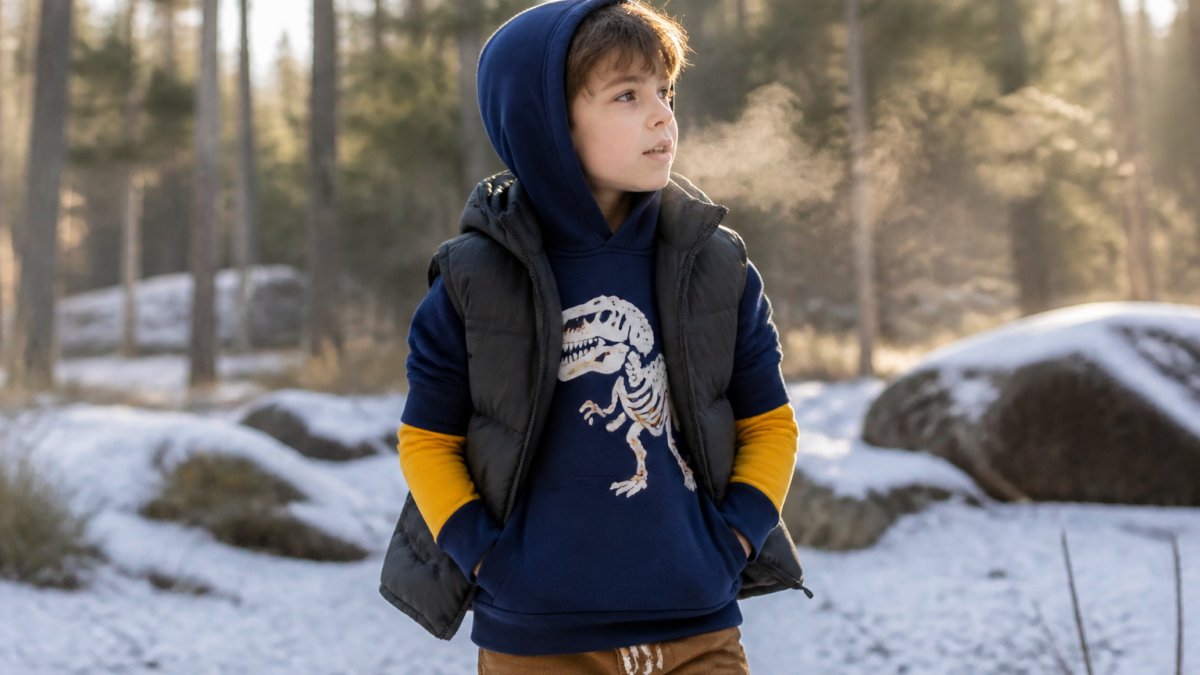
Mild Winter Days (Around 40-50°F / 4-10°C, Dry)
Formula: long-sleeve tee + graphic hoodie + open cardigan or lightweight vest (optional).
Kids' Hooded Sweatshirt - 'Walabookies' Colorful Cartoon Logo Pullover →
On mild days, the hoodie itself provides enough insulation for active play. Start with a thin cotton or cotton-blend long-sleeve tee in a neutral color or subtle stripe that complements the graphic without competing.
If it's windy or the child will be outside for extended periods, add an open cardigan or a lightweight puffer vest. Leave the cardigan unbuttoned or the vest unzipped so the graphic stays visible. Pair with jeans, leggings, or casual pants and sneakers. This outfit works for school, playground time, or casual outings.
Cold and Windy Weather (Around 20-35°F / -6 to 2°C, Dry)
Formula: thermal base layer + graphic hoodie + puffer vest or insulated jacket + warm pants.
When temperatures drop and wind picks up, start with a fitted thermal base layer of merino wool blend or synthetic wicking fabric. Avoid cotton, which holds moisture and loses insulating value when damp.
Add the graphic hoodie as the mid layer.
Pair with fleece-lined leggings or insulated pants. Warm socks and waterproof boots keep feet comfortable. A simple beanie or hood keeps ears warm. Keep the outer layer neutral so the graphic remains the statement piece.
Wet or Rainy Conditions (Any Temperature, Rain or Wet Snow)
Formula: moisture-wicking base layer + graphic hoodie + waterproof jacket with sealed seams + waterproof pants and boots.
Wet weather requires a waterproof outer shell, not just water-resistant. Look for jackets labeled waterproof with taped or sealed seams. A water-resistant coating alone won't hold up in steady rain.
Under the jacket, keep the base layer thin and moisture-wicking. The graphic hoodie provides insulation, but if it gets soaked it loses warmth, so the waterproof shell is non-negotiable.
Waterproof pants or snow pants protect the lower body. Waterproof boots with good tread keep feet dry and stable.
Indoor-to-Outdoor Transitions
Moving between heated indoors and cold outdoors is a common winter challenge.
Avoid outfits that require pulling a sweater over the head or removing multiple layers to adjust temperature. Zippered and button-front outer layers are easier for kids to manage independently.
See the Kids' Hooded Sweatshirt to find the perfect graphic hoodie for your child's winter wardrobe.

These outfit formulas show what to layer for three common winter conditions, each built around a graphic hoodie as the mid layer.
| Condition | Temperature | Base Layer | Outer Layer |
|---|---|---|---|
| Mild, dry | Around 40-50°F | Long-sleeve tee | Open cardigan or lightweight vest |
| Cold and windy | Around 20-35°F | Thermal base layer | Puffer vest or insulated jacket |
| Wet or rainy | Any temperature | Moisture-wicking base | Waterproof jacket with sealed seams |
Balancing Fit and Proportions When Layering
Fit matters when you stack layers: an oversized graphic hoodie with multiple layers underneath looks sloppy, while one that's too snug won't fit layers comfortably.
The right fit is a regular or slightly relaxed hoodie that has room for one or two base layers. It should sit naturally at the hips without bunching at the waist. Sleeves should hit the wrist when arms are relaxed.
Proportions matter too: if the hoodie is oversized, keep base layers fitted; if it fits normally, base layers can be slightly roomy.
Hem length affects how layering looks. A hoodie that hits mid-hip works best for layering. Longer hoodies can look droopy over multiple layers. Shorter hoodies might ride up when layered.
When adding an outer layer, consider the overall bulk. A fitted graphic hoodie with a slim thermal base plus a slim puffer vest creates a sleek winter look.
Fabric Care and Durability Tips
Graphic hoodies take a beating from hard play and winter weather. Proper care keeps the graphic sharp and the hoodie lasting through multiple seasons.
Wash graphic hoodies inside out. This protects the printed graphic from friction and fading. Use cold water and a gentle cycle. Hot water can damage both the fabric and the print.
Avoid bleach. Even non-chlorine bleach can fade graphics and weaken fabric over time. Mild detergent is enough for most stains.
Air dry when possible. Follow specific guidance on how to wash graphic shirts to prevent fading and preserve the design through winter wear.
The fleece in graphic hoodies holds its shape better when treated gently; rough washing and high heat break down fibers over time. Learn which fabrics are most durable for kids clothing to maintain quality through layered winter wear.
[
Layering a graphic hoodie for winter doesn't have to be complicated.
Frequently Asked Questions
How do you layer a graphic hoodie without hiding the design?
Keep the graphic visible by wearing fitted base layers underneath and choosing open or unbuttoned outer layers. A cardigan worn open, a puffer vest, or a jacket left unzipped all let the hoodie's design show. For maximum visibility, pair your graphic hoodie with a long-sleeve thermal shirt underneath rather than bulky sweaters that compete for attention.
What should you wear under a hoodie in winter?
Thermal base layers or long-sleeve shirts work best under hoodies in winter. A fitted thermal base layer adds warmth without bulk, while collared long-sleeve shirts create a casual layered look. Choose fitted options to avoid excess fabric bunching at the wrists and waistband when the hoodie sits on top.
Can kids wear a hoodie under a winter coat?
Yes, kids can wear a hoodie under a winter coat, but choose a fitted hoodie to prevent excessive bulk. A graphic hoodie with a regular fit works well under jackets. Ensure the coat is one size up if needed to accommodate the extra layer comfortably without restricting movement.
What's the best way to keep a hoodie from feeling bulky under a jacket?
Start with a fitted base layer under the hoodie, then add a lightweight puffer vest or unpadded jacket on top. Avoid stacking multiple thick sweaters. Choose hoodies with midweight fleece rather than heavy fabric, and opt for jackets with some stretch to accommodate layering without feeling restrictive.
