
Table of Contents
- Why Durable Fabrics Matter for Kids Clothing
- Organic Cotton vs Synthetic Fabrics for Kids
- Bamboo, Hemp, and Linen: Natural Fibers That Last
- How to Care for Kids Clothes to Make Them Last
- Best Laundry Detergents for Sensitive Baby Skin
- Budget-Friendly Durable Alternatives and End-of-Life Recycling
- Frequently Asked Questions
Last Updated: September 20, 2026
Why Durable Fabrics Matter for Kids Clothing
The best durable fabrics for kids clothing are those that hold their shape, color, and structure through repeated washing, rough play, and the occasional ketchup incident. At Walabookies, we hear the same frustration from parents constantly: a shirt looks great on day one, then pills, fades, or shrinks by week three. That cycle costs families money and wastes time.
Durability in kids' clothing comes down to three measurable factors: fiber density, tensile strength, and abrasion resistance. A fabric with a tight, durable weave resists pulling and pilling. Higher tensile strength means seams and cuffs survive tugging. Abrasion resistance determines how long a garment looks new after sliding across playground surfaces.
Most parents focus on style and price. The smarter approach is asking what happens after fifteen washes. That's where the real difference between a hand-me-down and a throwaway shows up.
Organic Cotton vs Synthetic Fabrics for Kids
Organic cotton is a natural fiber grown without synthetic pesticides, while synthetic fabrics like polyester are manufactured from petroleum-based polymers. For kids' clothing, the choice affects breathability, skin comfort, and how the garment ages.
Organic cotton wins on breathability and hypoallergenic qualities. It feels soft, regulates temperature well, and rarely irritates sensitive skin. Its weakness is shrinkage and slower drying. A cotton tee left in a hot dryer can lose shape fast.
Synthetic blends win on stretch recovery and moisture-wicking. They dry quickly and resist wrinkles. The trade-off is that polyester traps heat and can pill over time if the fiber quality is low.
The smart middle ground is a tri-blend or cotton-poly mix. Our Textile Exchange organic cotton market report notes that organic fiber demand keeps rising as parents prioritize chemical-free options, but blends still dominate for activewear because of performance.
How Each Fiber Handles Real Play
Real play is brutal: sliding, climbing, spilling. Here's how the main fiber types hold up.
| Fiber | Abrasion Resistance | Breathability | Shrinkage Risk | Best For |
|---|---|---|---|---|
| Organic cotton | Moderate | High | Moderate | Everyday wear, sensitive skin |
| Polyester blend | High | Low | Low | Activewear, sports days |
| Bamboo viscose | Moderate | High | Moderate | Soft layers, sleepwear |
| Hemp | Very high | Moderate | Low | Heavy-duty play clothes |
| Flax linen | High | Very high | Low | Warm-weather wear |
Cotton-poly blends handle rough play best overall. Pure cotton feels better on skin but needs gentler washing.
Bamboo, Hemp, and Linen: Natural Fibers That Last
For a full play wardrobe, hemp and linen pieces are worth the investment. They outlast cotton by a wide margin and hold up through aggressive washing.
How to Care for Kids Clothes to Make Them Last
Caring for kids' clothes so they last comes down to four habits: wash cold, turn garments inside out, skip the dryer when you can, and treat stains fast. These steps protect fiber integrity and slow the wear that ruins cheap and premium garments alike.
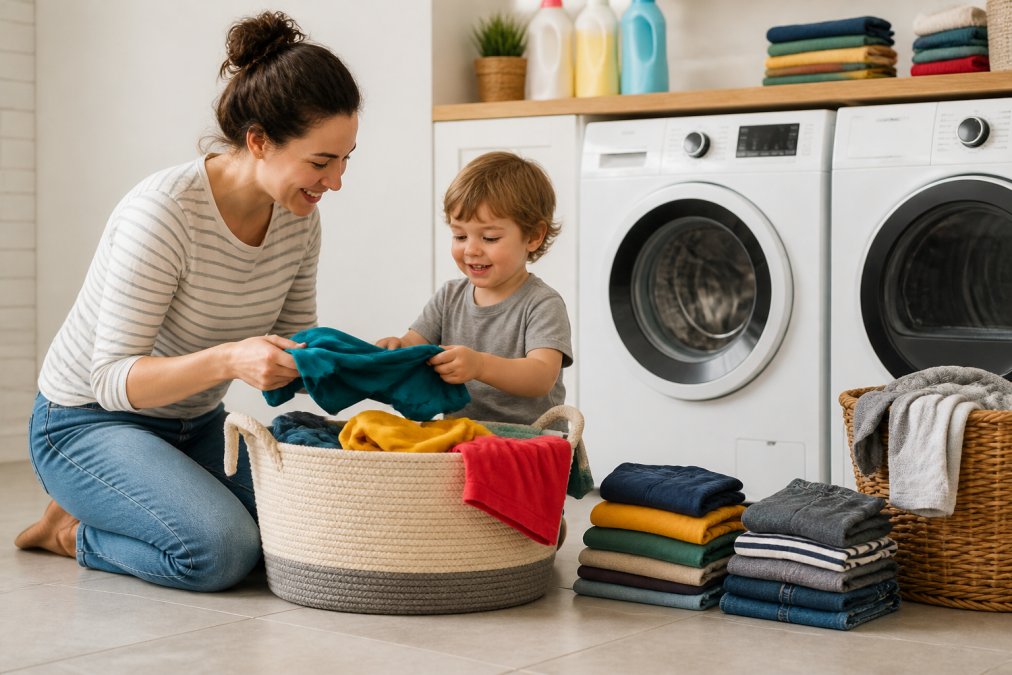
Cold water is the single biggest lever. Hot water breaks down fibers and sets stains. Turning clothes inside out reduces friction on prints and graphics. Air-drying preserves elasticity in cuffs and waistbands, which is where most garments fail first.
Sort by fabric weight, not just color. Heavy fleece and lightweight jersey knit wear at different rates, and mixing them in one load causes unnecessary abrasion.
Stain Removal for High-Activity Kids
Stain removal is where most parents give up and toss the shirt. Don't. Fast action and the right technique save almost anything.
- Blot the stain immediately, never rub, to avoid pushing it into the weave
- Rinse with cold water from the back of the fabric
- Apply a gentle enzyme detergent and let it sit for 15 minutes
- For grease, add a drop of dish soap before washing
- For grass and mud, soak in cold water with oxygen bleach
- Wash on a normal cycle and check before drying
- Repeat the treatment if any trace remains
Heat sets stains permanently. Always inspect the garment before it hits the dryer.
Fabric-Specific Maintenance Guide
Different durable fabrics need different care to maximize lifespan. Here's how to treat the most common kids' clothing fibers:
| Fabric | Washing Tips | Drying Tips | Stain Removal Notes |
|---|---|---|---|
| Organic cotton | Cold wash, gentle cycle, mild detergent | Tumble dry low or air-dry | Enzyme detergent works well; avoid hot water |
| Polyester blend | Cold or warm wash, normal cycle | Tumble dry low; remove promptly | Oxygen bleach safe; avoid fabric softener |
| Bamboo viscose | Hand wash or gentle cycle, cold | Lay flat to dry; avoid direct heat | Treat stains immediately; avoid chlorine bleach |
| Hemp | Cold wash, normal cycle; softens with each wash | Tumble dry low or line dry | Oxygen bleach safe; pre-soak for tough stains |
| Flax linen | Cold wash, gentle cycle; avoid overloading | Line dry or tumble low; remove while damp | Enzyme detergent; avoid wringing |
Extending Life Through Repair
Small holes, loose seams, and missing buttons don't mean the end. A basic repair kit, needle, thread, iron-on patches, and a few minutes, can add months or years to a garment. Teach kids to patch their own clothes as a life skill. For high-wear areas like knees and elbows, reinforce with a double layer of fabric before the first wear.
Best Laundry Detergents for Sensitive Baby Skin
The best laundry detergents for sensitive baby skin are fragrance-free, dye-free, and formulated without harsh surfactants. These detergents clean effectively while leaving fewer residues that trigger irritation.
Look for the phrase "free and clear" on the label. Avoid detergents with added perfumes, optical brighteners, or strong enzymes. A American Academy of Dermatology guidance on sensitive skin recommends gentle, fragrance-free formulas for anyone prone to irritation, and that advice applies double to infants.
Powder detergents sometimes leave residue in cold washes. Liquid formulas dissolve more completely and rinse out of dense fabrics like fleece. For heavily soiled items, a pre-wash cycle helps.
One insider note: fabric softener is the enemy of durability. It coats fibers, reduces absorbency, and traps odors. Skip it entirely for kids' clothing.
Budget-Friendly Durable Alternatives and End-of-Life Recycling
Budget-friendly durable options exist if you know where to look. Mid-weight jersey knit pieces last well. Buying fewer, better garments beats replacing cheap ones every season.
For families watching spending, the math favors quality.
Affordable Durable Fabrics to Look For
Not every durable fabric carries a premium price tag. These options balance cost and longevity:
- Mid-weight jersey knit: A denser knit (around 180-200 GSM) resists stretching and holds shape through many washes. Look for this in play clothes.
- Recycled polyester: Made from plastic bottles, it's often cheaper than virgin polyester and equally durable. Best for outerwear and activewear.
- Cotton-poly blends (50/50 or 60/40): The workhorse of kids' activewear. Affordable, fast-drying, and abrasion-resistant.
End-of-Life: Recycling and Circularity for Kids' Clothes
When clothes finally wear out, recycling matters. Options include:
- Textile recycling banks that accept worn garments
- Brand take-back programs for old kids' clothing
- Donating clean items to local charities
- Repurposing fabric into rags, quilts, or craft projects
Stains and small holes don't have to mean the end. A patch or a repair stitch keeps a favorite piece in rotation.
Frequently Asked Questions
What is the best fabric for kids clothes?
There is no single best fabric, but combed ring-spun cotton and cotton-poly blends offer the strongest balance of softness, washability, and durability for everyday wear. Cotton handles frequent washing without pilling, while a small percentage of polyester adds shape retention. For active kids, moisture-wicking polyester works well for sports. Look for reinforced seams, ribbed cuffs, and tear-away labels as signs of quality construction.
Is cotton or polyester better for kids' clothing durability?
Polyester wins on pure abrasion resistance and fast drying, but cotton feels softer against sensitive skin and breathes better in heat. A 50/50 cotton-poly blend, like the midweight fleece used in kids' hoodies, combines durability with comfort. For play clothes that get washed constantly, blends often outlast 100% cotton because they resist shrinkage and hold their shape. Choose based on activity: cotton for daily comfort, polyester for sport.
How do I choose sustainable and durable fabrics for my child?
Look for GOTS-certified organic cotton and OEKO-TEX certified materials. These fabrics are grown and processed with fewer chemicals and tend to have strong fiber density. Check care labels too: garments with durable weave construction, double-needle stitching, and reinforced necklines last longer, which reduces how often you replace them. Fewer, better-made pieces beat a drawer full of thin ones.
What fabrics are best for sensitive skin and high activity?
Combed ring-spun cotton is gentle on sensitive skin because it is smooth and hypoallergenic. For high activity, moisture-wicking polyester or cotton-poly blends keep sweat moving away from the body. Avoid rough synthetics and heavy dyes. Wash new clothes before wearing them, use a fragrance-free detergent, and choose garments with tear-away labels to prevent irritation during long play sessions.
Finding kids' clothing that survives real play without falling apart is a genuine challenge, and the wrong fabrics waste both money and patience. Walabookies curates playful, durable pieces designed to hold up, from colorful pullovers to GOTS-certified organic bodysuits that stay soft wash after wash. Explore the collection and pick pieces built to last through every playground adventure. Continue shopping with Walabookies and dress your little ones in clothing that keeps up.