
Table of Contents
- What Makes Kids' Clothing Actually Durable?
- Best Fabrics for Active Kids Clothing
- Top Durable Clothing Brands for Active Kids: Quick Comparison
- Walabookies: Playful Prints That Hold Up to Real Play
- How to Extend the Life of Kids Clothes
- Best Laundry Detergents for Sensitive Baby Skin
- Cost-Per-Wear: Why Durable Clothing Brands Save Money
- Conclusion
- Frequently Asked Questions
Last Updated: September 15, 2026
What Makes Kids' Clothing Actually Durable?
Durable kids' clothing comes down to three things: fabric weight, seam construction, and how the garment handles repeated washing. A shirt can look sturdy on the shelf and still fall apart after ten cycles if the seams are single-stitched or the fabric is too thin for daily play.
The problem is that most labels don't tell you fabric weight, stitch type, or abrasion ratings. You're left guessing from a product photo.
Below, we break down what actually signals a durable garment, which fabrics hold up best for best durable clothing brands for active kids, and how to calculate whether a higher price tag is worth it.
Reinforced Knees, Seam Strength, and Abrasion Resistance
Reinforced knees and double-stitched seams are the two construction details that matter most for active kids. Abrasion resistance follows from fabric choice and weave density.
Look for these specifics when you're evaluating any pair of kids' pants or a tee:
- Double-needle stitching at stress points (shoulders, crotch, knees)
- Bar-tacked pockets so they don't tear when kids stuff rocks and snacks inside
- Flatlock or coverstitched seams that lie flat and resist pulling
- Gusseted crotches on pants, which reduce blowout risk during climbing and squatting
A common mistake is assuming thicker fabric always means more durable. A tightly woven midweight fabric often outlasts a loosely knit heavy one because the fibers don't shift and thin out.
Fabric Weight and Why It Matters for Play
Fabric weight, measured in ounces per square yard, tells you how much material is in the garment. Heavier fabrics resist abrasion better, but they also trap heat and slow drying.
For active kids, the sweet spot depends on the season and activity:
| Fabric Weight | Typical Use | Durability | Breathability |
|---|---|---|---|
| 3.5-4.5 oz/yd² | Summer tees, base layers | Light | High |
| 5.0-6.5 oz/yd² | Everyday tees, light pants | Moderate | Moderate |
| 7.5-8.5 oz/yd² | Hoodies, sweatshirts | High | Lower |
| 9.0+ oz/yd² | Outerwear, heavy pants | Very high | Low |
The Walabookies Youth Competitor Tee sits at 3.8 oz/yd², which is intentionally light for sports and warm-weather play. It trades some abrasion resistance for breathability and moisture-wicking performance, a reasonable trade-off for a performance tee.

Best Fabrics for Active Kids Clothing
The best fabrics for active kids balance abrasion resistance, breathability, and moisture management. No single fiber wins on all three, which is why blends dominate the category.
Here's how the main options compare:
- 100% organic cotton: Soft, breathable, and gentle on sensitive skin. It absorbs moisture well but dries slowly and can pill with heavy abrasion. Best for everyday wear, not intense sports.
- Cotton-poly blends (50/50 or 60/40): These hold shape better than pure cotton, resist shrinking, and dry faster. The Walabookies Kids' Hooded Sweatshirt uses a 50/50 midweight blend at 8.0 oz/yd².
- Moisture-wicking polyester: The go-to for performance apparel. It pulls sweat away from skin and dries fast, but lower-quality versions can feel clammy. Look for fabric weights around 3.5-4.5 oz/yd² for breathability.
- Combed ring-spun cotton: Smoother and stronger than standard cotton because short fibers are removed during spinning. The Walabookies Toddler Long Sleeve Tee uses this in a 4.5 oz/yd² weight.
- Stretch-fabric blends with elastane: Add 3-5% elastane to cotton or poly for ergonomic fit that moves with kids instead of restricting them. Useful for pants and active tops.
Top Durable Clothing Brands for Active Kids: Quick Comparison
Here's a side-by-side look at the Walabookies pieces built for high-wear areas, with fabric specs, pricing, and best-use cases.

| Product | Fabric & Weight | Key Durability Feature | Price | Best For |
|---|---|---|---|---|
| Youth Competitor Tee | 100% moisture-wicking poly, 3.8 oz/yd² | Tear-away label, DTF print | $26.99 | Sports, tournaments, warm-weather play |
| Kids' Hooded Sweatshirt | 50/50 cotton-poly fleece, 8.0 oz/yd² | Twill necktape, kangaroo pocket | $39.99 | School, weekend wear, layering |
| Wacky Kids Toddler Hoodie | 60/40 combed ring-spun cotton-poly, 7.5 oz/yd² | Ribbed cuffs, coverstitching | $48.28 | Toddlers, playdates, cooler mornings |
| Toddler Long Sleeve Tee | Combed ring-spun cotton, 4.5 oz/yd² | Reinforced neckline, ribbed cuffs | $28.80 | Everyday layering, preschool |
| Kids Graphic Tee | Airlume combed ring-spun cotton | Side seams, shoulder tape | $18.82 | Casual wear, classroom, family outings |
The pattern here: lighter fabrics for movement-heavy activities, heavier blends for warmth and structure. None of these are one-size-fits-all, and that's the point.

Walabookies: Playful Prints That Hold Up to Real Play
Walabookies builds kids' clothing around a simple idea: playful design shouldn't come at the cost of durability. The prints are bold, the fabrics are spec'd for real wear, and the construction details (twill necktape, coverstitching, reinforced necklines) are included.
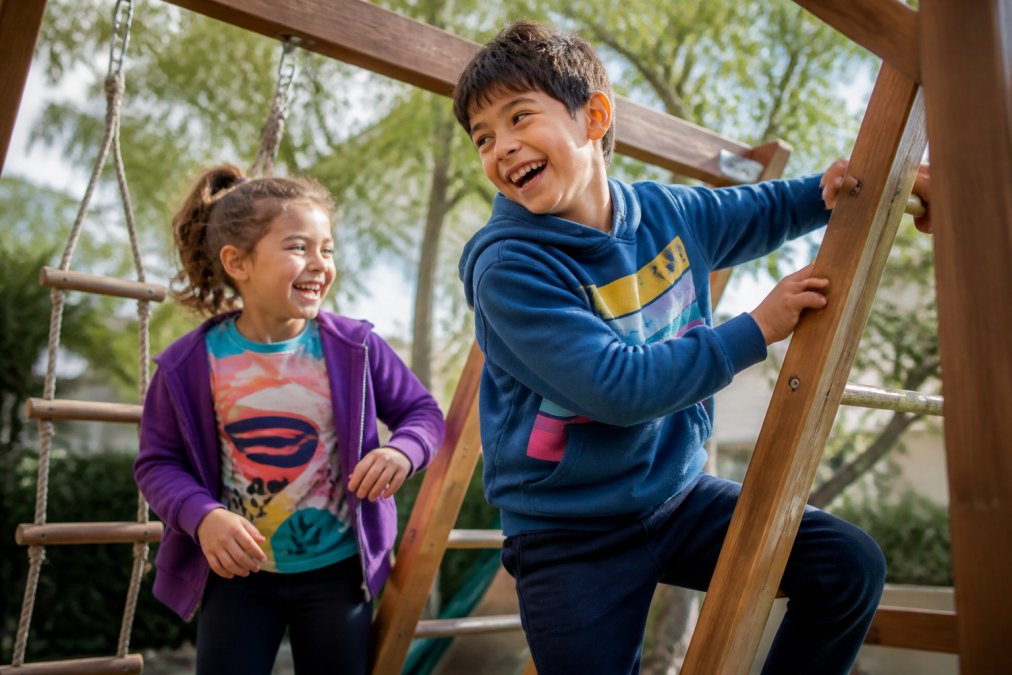
What sets the range apart is the consistency of construction across price points. The $18.82 Kids Graphic Tee uses shoulder tape and side seams. The $48.28 toddler hoodie uses combed ring-spun cotton.
Youth Competitor Tee: Lightweight and Sweat-Ready
The Youth Competitor Tee is built for kids who run hot. At 3.8 oz/yd² with 100% moisture-wicking polyester, it dries fast and stays airy through warm-ups and games.
The Direct-to-Film print is used, and the tear-away label is included. Sizes run XS to XL, with a 15.25 to 19.5 inch width range.
Hoodies and Toddler Layers Built for Wash-and-Wear
The Kids' Hooded Sweatshirt and Wacky Kids Toddler Hoodie are the workhorses of the lineup. Both use midweight fleece (8.0 and 7.5 oz/yd² respectively), which is heavy enough to resist abrasion from playground surfaces but light enough to layer.
The toddler version uses 60% combed ring-spun cotton. Ribbed-knit cuffs and waistbands are included, and the jersey-lined hood adds warmth. Side-seam pockets are included.
For the youth hoodie, twill necktape is included.
How to Extend the Life of Kids Clothes
Extending the life of kids clothes comes down to three habits: washing cold, air-drying when possible, and treating stains before they set. These three changes alone can add months to a garment's usable life.
Here's a practical checklist:
Best Laundry Detergents for Sensitive Baby Skin
What to look for:
Cost-Per-Wear: Why Durable Clothing Brands Save Money
Here's how it plays out with numbers:
| Garment | Price | Estimated Wears | Cost Per Wear |
|---|---|---|---|
| Budget graphic tee | $10 | 8-12 | $0.83-$1.25 |
| Walabookies Kids Graphic Tee | $18.82 | 40-60 | $0.31-$0.47 |
| Walabookies Youth Competitor Tee | $26.99 | 50-70 | $0.39-$0.54 |
| Walabookies Toddler Hoodie | $48.28 | 80-100 | $0.48-$0.60 |
Conclusion
OEKO-TEX Standard 100 textile certification guidelines
GOTS organic textile processing standard
REACH chemical safety regulation for textiles
Frequently Asked Questions
What are some good activewear brands for kids?
Look for brands that use moisture-wicking fabrics, reinforced seams, and durable prints. Walabookies offers a Youth Competitor Tee made from 100% moisture-wicking polyester with a tear-away label, priced at $26.99. Their hoodies use a 50/50 cotton-poly blend. When comparing durable clothing brands, check fabric weight, seam construction, and whether prints are DTF or DTG, as these details affect how well the garment survives active play.
How do I choose durable clothing for active children?
Start by checking high-wear areas: reinforced knees, double-stitched seams, and ribbed cuffs that resist stretching. Fabric weight matters too. A 7.5 oz/yd² fleece like the Wacky Kids Toddler Hoodie is suitable for playground use. Also look for tear-away labels to prevent irritation and DTF prints that won't crack. The best durable clothing brands for active kids combine these construction details with fabrics that breathe and move.
What are the best fabrics for active kids clothing?
Moisture-wicking polyester, cotton-poly blends, and combed ring-spun cotton are top choices. Polyester dries fast and handles sweat, while cotton-poly blends offer warmth without bulk. For toddlers, 100% combed ring-spun cotton is used. Avoid cheap synthetic blends that pill quickly. The best fabrics for active kids clothing balance breathability, stretch, and abrasion resistance so clothes survive both the playground and the laundry cycle.
How can I extend the life of kids clothes?
Wash in cold water (max 30C), turn garments inside out, and skip the tumble dryer when possible. Use a mesh laundry bag for small items. Treat stains promptly with a gentle detergent. For hoodies and tees, air-drying preserves fabric integrity and print quality. Rotating outfits so each piece gets rest between wears also reduces wear on fibers. These habits can add months to how long kids clothes stay looking new.
What laundry detergent is best for sensitive baby skin?
Choose fragrance-free, dye-free detergents formulated for sensitive skin. Look for labels that say hypoallergenic and free of optical brighteners. Liquid detergents rinse out more easily than powders, which matters for babies and toddlers. Always use the recommended amount, as extra detergent leaves residue that can irritate skin. For the best laundry detergents for sensitive baby skin, check for pediatrician-tested or dermatologist-tested claims and avoid fabric softeners.