
Table of Contents
- Why Kids' Clothes Shrink: The Real Causes
- How to Read Clothing Care Labels Before You Wash
- Wash Smart: Temperature, Cycle, and Detergent Choices
- How to Air Dry Kids Clothes to Avoid Heat Damage
- How to Unshrink Baby Clothes: What Actually Works
- Common Laundry Mistakes That Cause Shrinking
- Sustainable Laundry Habits That Protect Your Kids' Clothes
- Frequently Asked Questions
Last Updated: September 10, 2026
Why Kids' Clothes Shrink: The Real Causes
Learning how to prevent kids clothes from shrinking starts with understanding why it happens. Most shrinkage isn't a manufacturing defect. It's heat and agitation acting on fibers that were stretched during production, causing them to relax back to a shorter state.
Cotton is the biggest offender. Yarn is pulled taut when fabric is woven, then heat and water let those fibers snap back. Wool shrinks even faster because its surface scales lock together under agitation, a process called felting. Synthetics like polyester and nylon resist this because they're thermoplastic, but they can still warp under high dryer heat.
Natural Fibers vs. Synthetic Blends
Natural fibers shrink far more than synthetics. Cotton can lose noticeable length in a single hot wash, while a 60/40 cotton-poly blend shrinks a fraction of that because the synthetic portion holds its shape. This is why pre-shrunk cotton and blended kids' clothing hold up better wash after wash.
The American Cleaning Institute's fabric care guidance notes that fiber content, not brand, is the single best predictor of how a garment responds to washing. Check the tag before you assume anything.
How to Read Clothing Care Labels Before You Wash
A care label is a contract between you and the garment. Ignore it and you're gambling with every wash. But most parents skim the symbols and miss the fiber content line, which is the single most important predictor of shrinkage.
Decoding the Symbols
The washtub symbol tells you water temperature and cycle. A tub with one dot means cold (up to 30°C / 85°F); two means warm (up to 40°C / 104°F); three means hot (up to 60°C / 140°F) (iso.org). A hand inside the tub means hand wash only. The triangle covers bleach, the square covers drying, and the iron covers heat. A circle means dry clean.
- Tub with a line underneath: permanent press cycle
- Square with a circle inside: tumble dry allowed
- Square with a horizontal line: dry flat
- Square with a vertical line: line dry
The Fiber Content Line Matters More Than the Symbols
Look for the percentage breakdown. A tag that says "100% cotton" will shrink more than one that says "60% cotton, 40% polyester." Here's what to expect at different wash temperatures:
- 100% cotton: Can shrink 3-5% in hot water (60°C) and up to 10% in a hot dryer. Cold water (30°C) limits shrinkage to 1-2%.
- Cotton-poly blends (50/50 or 60/40): Shrink 1-2% in warm water, less in cold. The synthetic fibers hold the structure.
- Wool: Shrinks dramatically with any agitation in warm water due to felting, can lose 20% or more. Cold hand wash only.
- Rayon/viscose: Weak when wet; can shrink 5-8% in warm water. Cold gentle cycle is safest.
- Polyester/nylon: Thermoplastic; resistant to shrinkage in water but can warp at high dryer heat (above 70°C / 158°F).
If the label says "pre-shrunk," it has already been treated to minimize future shrinkage, but it can still shrink slightly if you wash hot. When in doubt, treat every cotton item as if it will shrink unless proven otherwise.
Wash Smart: Temperature, Cycle, and Detergent Choices
Cold water is the single most effective defense against shrinkage. Heat is what drives fiber relaxation, so keeping the wash cycle cool protects garment size and color at the same time.
The Cold Water Rule
Wash kids' clothes on a cold water cycle whenever the label permits. Use a gentle or delicate cycle with a low spin speed to reduce mechanical agitation, which stresses fibers almost as much as heat. Choose a mild liquid laundry detergent rather than powder, since powders can leave residue that stiffens fabric over time.
Skip fabric softener on cotton and blends. It coats fibers and reduces absorbency, and it does nothing to prevent shrinking.
How to Air Dry Kids Clothes to Avoid Heat Damage
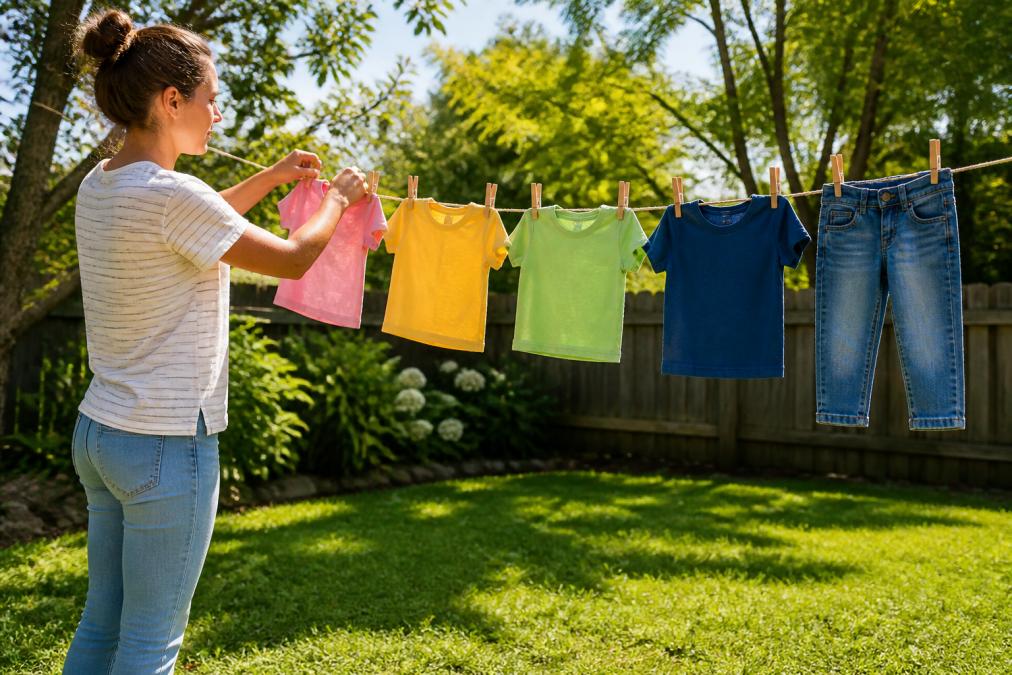
Air drying is the safest way to dry kids' clothes and the best way to prevent heat damage. Heat from a dryer is the leading cause of shrinkage in cotton, so removing it from the equation solves most of the problem.
Indoor vs. Outdoor Drying
Outdoor line drying uses sun and breeze, which is free and gentle. Lay garments flat or hang them on a line, reshaping them while damp so they dry in the right proportions. Indoor drying on a rack works just as well in cooler months; just keep the rack out of direct radiator heat.
If you must use a dryer, choose the lowest heat setting and pull items out while slightly damp. Over-drying is what does the damage.
How to Unshrink Baby Clothes: What Actually Works
You can sometimes relax shrunken cotton back toward its original size, but the results are partial. The method that works best is a warm water and conditioner soak followed by gentle stretching.
- Fill a basin with lukewarm water and a capful of hair conditioner.
- Submerge the garment and let it soak for 30 minutes.
- Gently squeeze out excess water without wringing.
- Lay the item flat on a towel and stretch it back to shape.
- Let it air dry completely before wearing.
This works on cotton and cotton blends. It won't fix wool that has felted, and it won't recover a garment that has shrunk repeatedly. For baby clothes, treat shrinkage prevention as the priority and restoration as a backup.
Common Laundry Mistakes That Cause Shrinking
Most shrinkage comes from a short list of avoidable mistakes. Here's what to stop doing, and the machine maintenance habits that quietly make things worse.
| Mistake | Why It Shrinks Clothes | The Fix |
|---|---|---|
| Hot water wash | Relaxes cotton fibers; wool felts | Switch to cold water cycle (30°C or below) |
| High dryer heat | Drives fiber contraction; synthetics warp above 70°C | Air dry or use low heat (below 60°C) |
| Overloading the drum | Extra friction and poor rinse; uneven heat distribution | Wash smaller loads, leave a hand's width of space |
| Washing by color only | Mixes incompatible fabrics; heavy items beat delicate knits | Sort by fabric weight and fiber type |
| Skipping the care label | Ignores fiber-specific needs | Read tags before washing |
| Dirty lint trap | Restricts airflow, causing dryer to overheat and run longer | Clean lint trap before every load |
| Clogged dryer vent | Traps heat, raising internal temperature beyond settings | Inspect and clean vent duct every 3-6 months |
The Machine Maintenance Angle Most Guides Miss
A dirty lint trap or a clogged dryer vent doesn't just create a fire hazard, it changes how heat moves through your dryer. When airflow is restricted, the drum gets hotter than the dial suggests, and clothes sit in that concentrated heat longer. That's a recipe for uneven shrinkage: some items come out fine, others look like they were made for a doll.
A common pattern is a dryer that takes two cycles to dry a load. That's often a sign of restricted airflow. Before you blame the fabric, check the lint trap and the outdoor vent flap. If the flap doesn't open fully during a cycle, you've found your culprit.
Sorting by Fabric Weight, Not Just Color
The International Association for Laundry and Textile Care recommends sorting by fabric weight and fiber type, not just color, because a heavy denim load will beat up delicate cotton knits in the same cycle. Heavy fabrics also take longer to dry, so if you mix them with lightweight items, the light ones overdry and shrink while the heavy ones stay damp.
The Rinse Cycle Factor
If your machine has a high-speed spin cycle, it can wring fibers so tightly that they stretch and then snap back unevenly in the dryer. Use a low or medium spin speed for cotton and blends. For wool and delicates, use the lowest spin setting or skip the spin entirely and press water out gently by hand.
Sustainable Laundry Habits That Protect Your Kids' Clothes
Cold washing and air drying do double duty: they protect garment longevity and cut household energy use. Running a cold cycle instead of hot reduces the energy your machine draws, and skipping the dryer removes one of the most power-hungry appliances from the equation entirely.
A few habits that pay off over time:
- Wash full but not packed loads to maximize efficiency per cycle
- Use mesh laundry bags for small items and delicates
- Choose concentrated detergent to reduce packaging waste
- Repair small tears and loose buttons before they become replacements
- Pass garments down rather than replacing them prematurely
These aren't just eco-friendly choices. They're the same choices that keep kids' clothes fitting properly for longer, which is the whole point.
Frequently Asked Questions
Can you reverse shrinkage in clothes?
Sometimes, yes. For cotton and other natural fibers, soaking the garment in lukewarm water with a little hair conditioner can relax the fibers. Gently stretch it back to shape and lay flat to dry. This works best on slight shrinkage. If the fabric has been heavily felted by high heat, the fibers are permanently locked and cannot be restored. Pre-shrunk items rarely shrink enough to need this.
What temperature should I wash kids' clothes to prevent shrinking?
Wash in cold water, ideally 30°C or lower. Heat is the main trigger for fiber contraction in cotton and cotton blends. A cold water cycle keeps fibers relaxed during agitation. If the care label allows, a delicate cycle with a low spin speed reduces stress on the fabric. Always check the label first, because some synthetics tolerate warmer water, but cold is the safest default for anything you want to keep fitting.
Does air drying really prevent clothes from shrinking?
Yes. Dryer heat causes the most dramatic shrinkage in natural fibers. Air drying kids clothes avoids that heat entirely, so the fabric dries without contracting. Hang or lay items flat in the shade to protect colors. If you must use a dryer, choose the lowest heat setting and remove items while slightly damp. Over-drying is a common cause of shrinkage that air drying eliminates.
How do I read clothing care labels to avoid shrinking?
Look for the washtub symbol with a number inside: 30 means 30°C, 40 means 40°C. A washtub with one line means gentle cycle. The square with a circle is the dryer; one dot means low heat, two dots medium, three high. A crossed-out dryer means do not tumble dry. A crossed-out washtub means hand wash only. When in doubt, cold wash and air dry is the safe choice for kids' clothes.
Kids' clothes take a beating, and shrinkage is one of the most frustrating ways to lose a favorite outfit before your child has outgrown it. At Walabookies, we curate kids' merchandise built for play and made to last, with quality and style in every piece. Explore our catalog of specialized kids' merchandise, find designs your little ones will actually want to wear, and continue shopping with Walabookies to keep their wardrobe fun and fitting right.