
Table of Contents
- Start With Each Child's Style, Not the Trend
- How to Build a Capsule Wardrobe for Kids With Different Tastes
- Styling Tips for Kids Who Know Exactly What They Want
- Sensory-Friendly Clothing Tips for Kids Who Hate Tags and Textures
- Stylish Clothes for 3 Year Olds and Older Kids: Age by Age
- Let Kids Lead: Encouraging Self-Expression Without the Battles
- Frequently Asked Questions
Last Updated: September 16, 2026
Start With Each Child's Style, Not the Trend
The most effective styling tips for kids with different tastes begin with observation, not shopping. Watch what your child reaches for again and again, then build from there. This guide from Walabookies breaks down how to dress siblings with completely different preferences without turning mornings into negotiations.
A common mistake parents make is buying a "family look" and expecting every child to wear it. In practice, that approach fails fast. One child loves bold patterns and bright color; the other wants soft neutrals and zero fuss. Treating those preferences as phases to correct, rather than signals to read, is where most wardrobe stress starts.
Why Siblings Rarely Share a Look
Siblings can share a bedroom, a birthday month, and a gene pool, and still want nothing to do with each other's clothes. Temperament plays a huge role. Some children seek stimulation through color and texture; others avoid it.
That difference shows up early. A toddler might refuse a scratchy seam while an older sibling happily wears the same shirt for three days straight. Neither child is being difficult. They are expressing what their bodies and personalities find comfortable.
How to Build a Capsule Wardrobe for Kids With Different Tastes
A capsule wardrobe for kids is a small, coordinated set of clothing pieces that can be mixed and matched into many outfits. For children with different tastes, the goal is a shared base of wardrobe basics plus a few personality pieces each child chooses. The challenge is that a capsule built for one child's bold, pattern-heavy taste will not work for a sibling who prefers quiet neutrals. The solution is a two-tier system: a neutral core that every child wears, and a personal accent layer that each child controls.
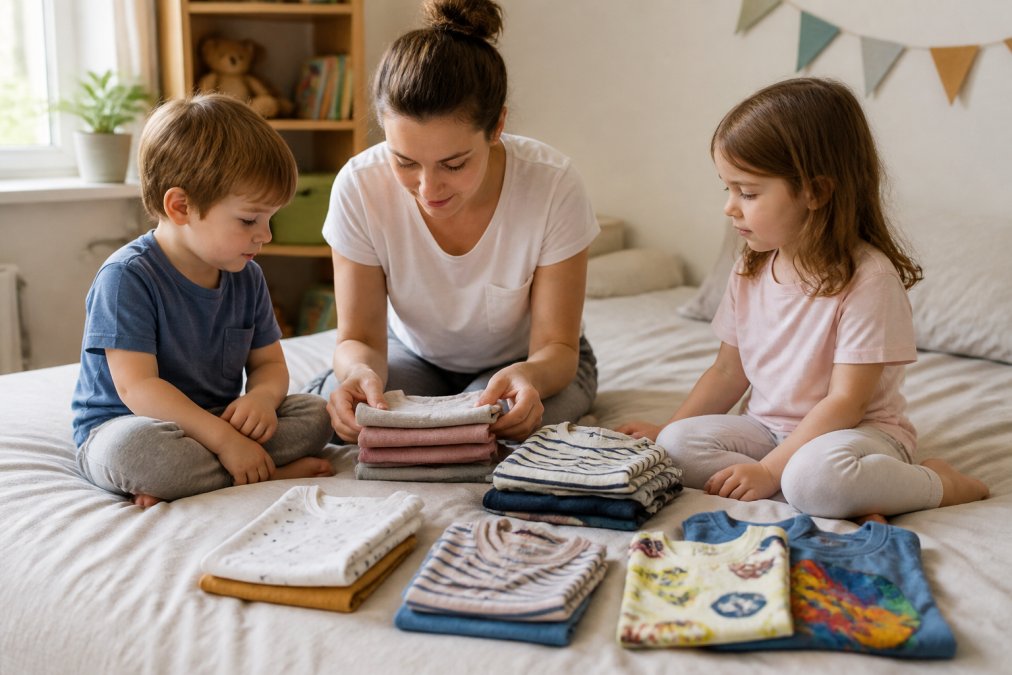
Here is the formula that works for most families:
- 8-10 tops in neutral tones (white, gray, navy, black) plus one accent color per child
- 4-5 bottoms that coordinate with every top (joggers, jeans, leggings, shorts)
- 2-3 layers such as a hoodie, zip-up, or long-sleeve tee
- 3-4 personal picks your child selects themselves, this is where bold prints, favorite characters, or unusual colors live
This keeps the total count low while leaving room for individual identity. Fewer pieces also means garment durability matters more, so quality beats quantity every time. Look for reinforced knees, double-stitched seams, and fabrics that hold color after repeated washing. A common pattern is that cheap multipacks fade or shrink within a month, while a slightly more expensive piece lasts through a growth spurt and can be handed down.
The Mix-and-Match Base Every Child Needs
The base layer of any kids' capsule should be boring on purpose. Plain tees, simple joggers, and one neutral hoodie work with almost anything. From there, each child adds their own flair: bold patterns for one, muted tones for the other. But the base itself must be truly neutral, not just in color, but in cut and texture. Avoid logos, ruffles, or unusual silhouettes in the core pieces, because those details can clash with a child's personal picks.
Mix and match works because it removes decision fatigue. When everything coordinates, kids can pick their own outfit without a parent refereeing. That independence is the whole point. To make it work across different tastes, use a simple rule: every top must match every bottom in the core.
Accommodating Growth and Sensory Needs in a Capsule
A capsule wardrobe for kids must account for rapid growth and sensory sensitivities. Adjustable waistbands, extendable hems, and roomy shoulders can add months of wear. For sensory-sensitive children, prioritize flat seams, tagless labels, and soft fabrics in the core pieces, not just in the accent pieces. If a child refuses a fabric, it does not belong in their capsule, no matter how well it coordinates.
Styling Tips for Kids Who Know Exactly What They Want
When a child has a strong point of view, styling tips for kids should shift from directing to editing. Your job is not to change their taste. It is to help them wear it well. This is where most parents get it wrong: they treat a child's insistence on a specific look as a phase to correct, rather than a signal to work with.
Try these approaches:
- Let them pick the statement piece, you pick the supporting ones. If your child wants to wear a neon dinosaur tee, pair it with neutral joggers and simple sneakers. The outfit still reads as intentional, and the child feels heard.
- Offer two acceptable options instead of an open-ended choice. "Do you want the red hoodie or the blue one?" works better than "What do you want to wear?" because it gives autonomy within boundaries.
- Set boundaries on occasion and weather, not on color or print. A child can wear their favorite graphic tee to school, but not to a wedding. They can wear shorts in summer, but not in a snowstorm. Everything else is negotiable.
- Photograph outfits they love so they can repeat them easily. A quick phone photo of a successful outfit becomes a visual menu for mornings. This reduces decision fatigue for both of you.
Budget-Conscious Compromise: Letting Kids Express Bold Tastes Without Breaking the Bank
One of the biggest challenges with strong-willed dressers is cost. A child who wants a new look every week can drain a clothing budget fast. The solution is a budget-conscious compromise: give each child a set amount to spend on their personal picks, and let them decide how to allocate it. This teaches trade-offs and prevents impulse buys.
When to Hold the Line and When to Let Go
Not every preference is worth a fight. Weather, safety, and occasion are non-negotiable. If it is freezing outside, the child wears a coat, even if it clashes with their outfit. If the event is a formal family photo, they wear something presentable. But color, print, and layering order are almost always safe to hand over.
Sensory-Friendly Clothing Tips for Kids Who Hate Tags and Textures
Sensory-friendly clothing tips start with one rule: comfort is not negotiable. If a shirt itches, no amount of styling will make a child wear it.
Look for these features:
- Tear-away or printed labels instead of scratchy sewn-in tags
- Soft cotton or cotton blends that breathe and move
- Flat seams and shoulder tape to reduce rubbing
- Ribbed cuffs and collars that hold shape without pinching
Stylish Clothes for 3 Year Olds and Older Kids: Age by Age
Stylish clothes for a 3 year old look very different from what works at 8 or 10. Matching the outfit to the developmental stage of style saves a lot of arguments.
| Age | What Matters Most | Best Approach |
|---|---|---|
| 2-3 years | Comfort and easy changes | Soft fabrics, elastic waists, no fussy fastenings |
| 4-6 years | Color and character | Let them pick prints, keep the base simple |
| 7-9 years | Peer awareness | Mix and match sets they can assemble alone |
| 10-12 years | Identity and autonomy | Give a budget, let them choose within it |
Let Kids Lead: Encouraging Self-Expression Without the Battles
Fashion autonomy does not mean no rules. It means the child owns the choices inside boundaries you set. Weather, safety, and occasion are non-negotiable. Color, print, and layering order are theirs.
Frequently Asked Questions
How do I handle my child wanting to wear clothes I don't like?
Set a few non-negotiable rules (weather-appropriate, clean, school dress code) and let everything else go. If a child picks a bold graphic tee with mismatched shorts, that's a safe way to practice styling tips for kids. Save your veto for occasions that matter, like family photos, and let everyday outfits be their call. Kids who get regular practice choosing clothes build stronger personal expression and decision-making over time.
How to build a mix-and-match wardrobe for kids with different tastes?
Start with a shared base of neutral tones: plain tees, leggings, and jeans in colors that work together. Then let each child pick a handful of statement pieces, like a colorful cartoon hoodie or a bright graphic shirt, that slot into that base. A capsule wardrobe for kids works best when tops and bottoms can pair in at least three combinations, so every child gets versatility without doubling your spending.
At what age should I let my child choose their own clothes?
Toddlers around age two can pick between two options you've already approved. By four or five, most kids can choose a full outfit from their own drawer. Ages seven to ten bring stronger aesthetic preferences and brand awareness, so that's a good time to hand over more control within a budget. The goal isn't perfect outfit coordination, it's building fashion autonomy step by step.
How to dress a child with sensory issues?
Look for soft combed cotton, tear-away labels, and flat seams. Tagless tees and long-sleeve tops with ribbed cuffs tend to work well because they don't scratch or shift during play. Let your child test new fabrics for a few minutes before a full day of wear, and keep a couple of trusted sensory-friendly pieces in rotation so mornings stay calm.
Dressing kids with wildly different tastes is less about fashion and more about listening. Start with each child's comfort and preferences, build a small capsule they can mix and match, and let them lead inside clear boundaries. Walabookies makes that easier with playful graphic tees, soft toddler hoodies, and durable kids' sweatshirts designed for real, everyday wear. Browse the collection and find pieces both your kids will actually reach for.