
Table of Contents
- Why a Solid Kids Clothing Return Policy Matters for Parents
- Kids Clothing Return Policy Examples: What Fair Policies Look Like
- Best Practices for Children's Apparel Returns
- The Hidden Costs of 'Return-Everything' Culture
- How to Evaluate a Kids Clothing Return Policy Before You Buy
- Common Misconceptions About Kids Clothing Returns
- Conclusion: Shop Smarter with Return Policies in Mind
- Frequently Asked Questions
Last Updated: September 25, 2026
Why a Solid Kids Clothing Return Policy Matters for Parents
A kids clothing return policy is the written set of rules a retailer uses to decide whether an item can be sent back, exchanged, or refunded, and under what conditions. For parents shopping online, that document matters as much as the fabric content or the size chart. This guide from Walabookies breaks down what fair policies look like, how to read them before you buy, and where most shoppers get caught out.
Kids Clothing Return Policy Examples: What Fair Policies Look Like
A fair kids clothing return policy does three things: gives you a reasonable window, accepts unworn items with proof of purchase, and treats genuine defects differently from a change of mind. Policies that do all three are worth your loyalty.
- The return window: 30 days is standard; 60 to 90 days is generous, especially for gifts.
- Condition requirements: unworn with tags is normal; "unwashed and unaltered" clauses can trap you.
- Proof of purchase: receipts, order confirmations, or a digital receipt in your account.
- Refund versus store credit: cash back is stronger than merchandise credit.
- Defect handling: the best policies waive the window entirely for manufacturing flaws.
Footwear vs. Outerwear: How Return Windows Differ
Footwear and outerwear rarely follow the same rules. Shoes face stricter condition checks because soles scuff the moment a child walks outside; many retailers require footwear to be tried on indoors only, with the box and all inserts returned.
Store-Brand vs. Third-Party Items: Reading the Fine Print
A single order can contain items governed by two different policies. Store-brand merchandise usually follows the retailer's own terms, which are often the most flexible; third-party or marketplace items may be covered by the individual seller's policy instead, and those can be far stricter.
Best Practices for Children's Apparel Returns
The single best practice for children's apparel returns is to document the problem before you do anything else. Photograph the defect, keep the tags, save the order confirmation, and start the return the day you notice the issue. Speed and evidence win claims.
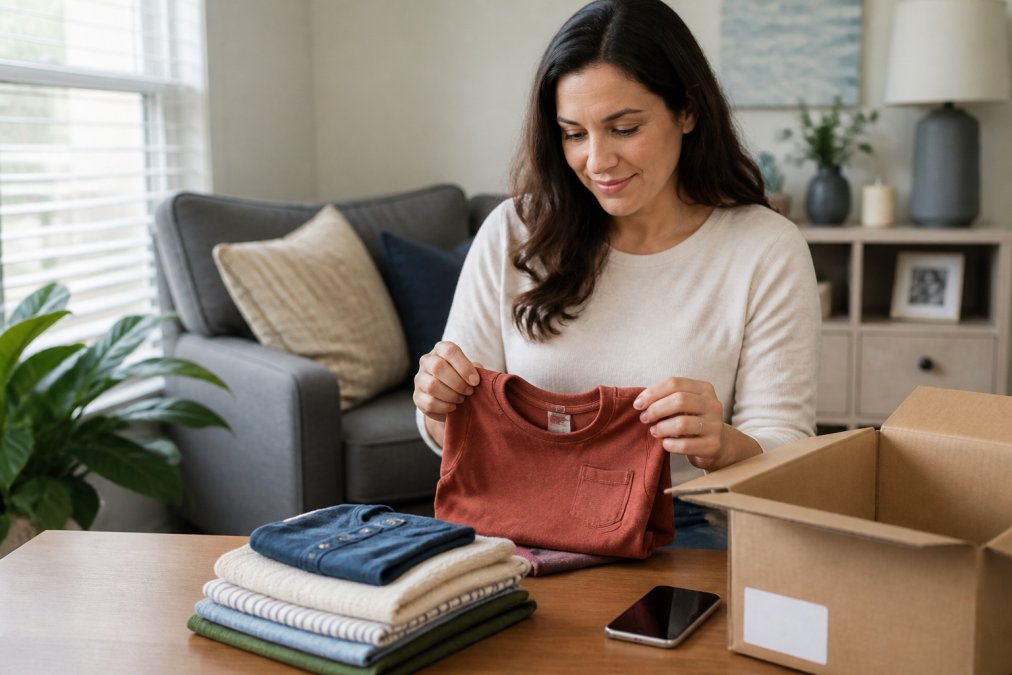
Here's what to do the moment something is wrong:
- Check the return window on your order confirmation immediately
- Photograph the item, the defect, and the original tags in one clear shot
- Keep the packaging until the return is fully processed
- Note the order number, purchase date, and item SKU
- Start the return request before the deadline, not on it
- Request a return authorization number if the store requires one
Documenting Defects: A Step-by-Step Guide
A quality defect is a fault in the item itself, a split seam, a broken zipper, a mislabeled size, or fabric that fails after one wash. That differs from buyer's remorse, which is simply deciding you don't want something you ordered. Retailers treat these two situations very differently, so your documentation should make the distinction obvious.
Follow this sequence:
- Photograph the defect in daylight. Show the whole item, then a close-up of the fault.
- Keep the tags attached. Cut tags are the fastest way to lose a claim.
- Write a one-line description. "Left sleeve seam split after first wash" beats "it's broken."
- Save your proof of purchase. A digital receipt or order confirmation works fine.
- Submit the claim in writing. Email or chat creates a record; phone calls don't.
- Reference the manufacturing flaw directly. Use the store's own language where you can.
How to Document a Defect So It Actually Gets Approved
Most parents lose defect claims not because the defect wasn't real, but because the evidence didn't match what the returns team looks for. A processor checks three things: does the photo prove the fault is in the garment rather than the result of wear, does the timeline fit the policy, and does the description map to a covered category like workmanship or materials.
- Shoot the whole item first, then the fault. A close-up of a ripped seam means nothing without context; the wide shot proves the garment is otherwise intact.
- Include the size tag and care label in at least one photo. This proves the item wasn't washed against the care instructions, the most common reason a defect claim gets denied.
- Photograph the packaging and shipping label if the item arrived damaged. Carrier damage is handled by a different team than manufacturing defects, and mixing the two slows the claim down.
- Write the description in the retailer's own vocabulary. If the policy says "manufacturing defect" or "workmanship issue," use those exact words. Matching the policy language reduces back-and-forth.
- Submit within 48 hours of noticing. Early submission signals good faith and gives you room to appeal a denial.
- Keep a copy of everything you send. Screenshot the chat, save the email thread, and note the agent's name or ticket number. If the claim escalates, that record is your leverage.
What to Do When a Defect Claim Is Denied
Denials are common and often reversible. The most frequent reason is a mismatch between the stated reason and the evidence, claiming a "defect" when photos show normal wear, or "damaged on arrival" when the package was signed for weeks earlier. If your first claim is denied, re-read the denial message, match your next submission to the specific reason given, and resubmit with the missing evidence rather than starting a new claim.
The Hidden Costs of 'Return-Everything' Culture
Generous return policies are not free, and the bill eventually reaches shoppers. Every returned item must be shipped, inspected, cleaned, repackaged, or written off, and those costs get built into shelf prices. Ordering five sizes and returning four pushes prices up for everyone.
The Economic Logic Behind Generous Return Policies
It helps to understand why retailers offer generous return windows, because the answer explains both the costs and the limits. A return policy is a risk-transfer tool: when a store says "30 days, no questions asked," it absorbs the cost of your sizing mistake in exchange for a higher chance you'll click "buy." For apparel, where fit is uncertain, that trade is usually worth it to the retailer.
What Actually Happens to a Returned Kids' Garment
Understanding the journey of a returned item makes the environmental cost concrete. A returned kids' shirt typically goes through several stages:
- Receiving and triage. The item is checked against the return reason and inspected for wear, stains, and missing tags.
- Grading. It is sorted into resellable, discount, liquidation, or disposal. Items with cut tags, pet hair, or signs of wash usually drop out of the resellable tier immediately.
- Reprocessing. Resellable items may be steamed, refolded, retagged, and returned to inventory, labor the original sale price didn't account for.
- Downstream channels. Items that can't go back to full-price shelves move to outlet, off-price, or liquidation channels at a fraction of the original price.
- End of life. Items that can't be sold at any tier may be donated, recycled, or destroyed, depending on the retailer's infrastructure and local regulations.
Returning With Intention: A Practical Framework
None of this means you should keep items that don't work. It means returning with intention. A few habits reduce both your costs and system-wide waste:
- Order the size you actually need. Use the size chart and customer fit notes. Ordering three sizes "just in case" is the biggest driver of avoidable returns.
- Return promptly rather than letting a package sit unopened. An item returned in week one can often be resold at full price; the same item returned in week five may not.
- Keep tags and packaging intact until you're sure. This preserves resale value and protects your claim if something is defective.
- Bundle returns when you can. One shipment back has a smaller footprint than three separate ones.
- Use the defect channel for defects, and the remorse channel for remorse. Mixing the two slows processing and can flag your account.
How to Evaluate a Kids Clothing Return Policy Before You Buy
Evaluating a return policy takes about two minutes and can save you the price of an entire order. Read the policy page before you add anything to your cart and check it against five criteria.
| Question | Why It Matters | Red Flag If Missing |
|---|---|---|
| Is the window 30 days or longer? | Covers sizing mistakes and gifts | 14-day windows |
| Are defects covered beyond the window? | Protects against manufacturing flaws | No defect clause |
| Is a digital receipt accepted? | Matches how you actually shop | Receipt-only requirement |
| Do you get a refund, not just store credit? | Real money back | Credit-only policies |
| Is the policy stated clearly at checkout? | Signals transparent store management | Hidden or vague terms |
Common Misconceptions About Kids Clothing Returns
The biggest misconception about kids clothing returns is that all stores follow the same rules. They don't. Return windows, condition requirements, and refund methods vary enormously, and assuming otherwise is how parents end up stuck with items they can't send back.
Here are the myths worth dropping:
- "I can always return it if it doesn't fit." Only within the stated window and only in acceptable condition.
- "Tags don't matter." For most stores, missing tags means automatic rejection.
- "Defects are always covered." Many policies require you to report a manufacturing flaw within a set period.
- "Store credit is the same as a refund." Merchandise credit locks your money into that one store.
- "Gift receipts never expire." Many do, often on the same timeline as standard returns.
- "Worn items can't be returned." Genuine defects on worn clothing are often still covered, if you document them.
Conclusion: Shop Smarter with Return Policies in Mind
Return policies are not fine print to skim past. They are the terms of the deal, and reading them before checkout is the difference between a stress-free purchase and a drawer full of clothes nobody can wear.
Frequently Asked Questions
Can you return an item after 2 years?
Most retailers set return windows between 30 and 90 days, so a two-year-old purchase is unlikely to qualify unless the item has a manufacturing flaw covered by a warranty. Some brands offer extended windows for defective merchandise, but you will need proof of purchase and clear photos of the issue. Check the retailer's policy before assuming you are out of luck.
Can you return worn kids clothes to Target?
Target generally accepts worn kids' clothing only if it has a quality defect, such as a broken zipper or faulty stitching. Normal wear and tear, outgrown items, or buyer remorse typically fall outside the return window. Bring your receipt or digital transaction history and be ready to explain the defect. Store management discretion often plays a role in these decisions.
Do companies throw away returns?
Many retailers discard returned items that cannot be resold, especially worn or damaged clothing. This practice contributes to the environmental impact of 'return-everything' culture. Some brands donate or recycle returns, but policies vary. To reduce waste, only order items you are likely to keep and consider resale or donation for outgrown clothing.
Why do some retailers offer one-year return policies for kids' clothing?
Extended return windows build customer loyalty and trust, especially for parents who shop online and cannot try items on their children first. Generous policies also encourage repeat purchases and reduce the friction of buying multiple sizes. The economic rationale is that the cost of returns is offset by higher customer retention and word-of-mouth referrals.