
Table of Contents
- How to Choose High Quality Children Apparel: A Practical Framework
- Best Fabrics for Kids' Clothes: Cotton, Linen, Wool, and Blends
- How Kids' Clothes Should Fit: Sizing, Stretch, and Freedom of Movement
- Safe Clothing for Children: Drawstrings, Small Parts, and Sleepwear Rules
- Construction Quality: Stitching, Seams, and Durability Tests You Can Do at Home
- Children's Clothing Care Tips: Washing, Shrinkage, and Colorfastness
- Cost Per Wear, Certifications, and Inclusive Fit: What Smart Buyers Check
- Conclusion: Building a Kids' Wardrobe That Lasts
- Frequently Asked Questions
Last Updated: October 6, 2026
How to Choose High Quality Children Apparel: A Practical Framework
Most parents judge kids' clothes by how they look on the rack. According to the American Academy of Pediatrics' guidance on children's clothing safety, the features that matter most are the ones you can't see in a product photo: fabric weight, seam construction, and whether the garment meets safety requirements for your child's age.
Children apparel quality comes down to three things: what the fabric is made of, how the garment is put together, and whether it fits well enough that your kid actually wears it. Get those right and you'll buy less, replace less, and hand pieces down instead of throwing them out.
Below, we'll show you exactly how to evaluate any kids' garment in under two minutes, whether you're shopping online or standing in a store.
The 3-3-3 Rule for Kids' Clothes
The 3-3-3 Rule is a quick screening method: check 3 fabric details, 3 construction points, and 3 fit questions before you buy. It takes about two minutes per garment and filters out most items that will shrink, pill, or fall apart within a few months.
Here's how it works:
| Check | What to Look For | Why It Matters |
|---|---|---|
| Fabric | Fiber content, weight, weave | Determines softness, breathability, lifespan |
| Construction | Stitching, seams, hardware | Predicts whether it survives repeated washing |
| Fit | Size chart, stretch, ease of dressing | Decides if your child will actually wear it |
Most parents skip straight to fit and price. That's backwards. Fabric and construction determine whether a garment is still wearable after ten washes, which is the real test of value.
Best Fabrics for Kids' Clothes: Cotton, Linen, Wool, and Blends
Cotton remains the best all-around fabric for kids' clothes because it's breathable, soft against skin, and washes well.
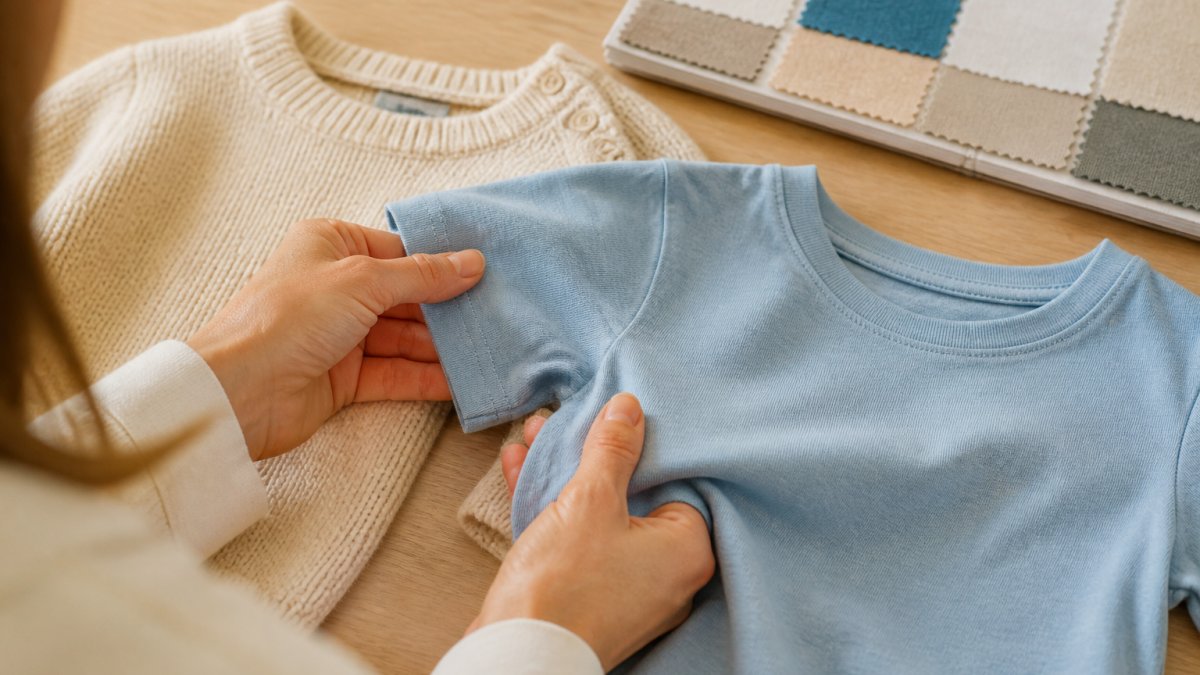
Organic cotton is grown without synthetic pesticides and is often certified through programs like the Global Organic Textile Standard.
Linen is a natural fiber made from flax.
Wool, particularly merino, regulates temperature and resists odors.
Knit fabric and French terry are constructions rather than fibers.
A practical rule: for everyday wear, look for 100% cotton or a cotton-rich blend.
Natural vs Synthetic Fibers: What to Pick and When
Natural fibers like cotton, linen, and wool win for breathability and skin comfort. Synthetic fibers like polyester and nylon win for durability, quick drying, and shape retention.
For sleepwear and base layers, natural fibers are the safer bet because they manage moisture and temperature better against skin.
Many parents worry that synthetic means uncomfortable. In practice, a well-made polyester fleece can feel softer than a cheap cotton sweatshirt.
How Kids' Clothes Should Fit: Sizing, Stretch, and Freedom of Movement
Kids' clothes should fit close enough to stay put but loose enough for full range of motion.
Sizing charts vary wildly between brands, so always measure your child rather than relying on age labels.
Three fit questions to ask before buying:
- Can my child dress themselves in this? Zippers, snaps, and wide necklines make a difference for toddlers learning independence.
- Does the waistband stay up during active play? Elastic that's too loose causes constant adjusting.
- Is there room to grow without looking oversized? Cuffed sleeves and adjustable waists extend wear time.
Freedom of movement is the single biggest predictor of whether a garment gets worn. Kids reject clothes that restrict them, no matter how good they look.
Safe Clothing for Children: Drawstrings, Small Parts, and Sleepwear Rules
Safety features matter as much as comfort. Drawstrings at the neck are a known strangulation hazard on children's upper garments, and small detachable parts can become choking risks for children under three.
Regulators in many markets set mandatory requirements for children's sleepwear, including flammability standards and fit rules. In the United States, the Consumer Product Safety Commission's children's sleepwear requirements specify that sleepwear must either be snug-fitting or treated for flame resistance, and must carry a permanent care label with specific warnings.
What to check before you buy:
- No drawstrings at the neck or hood on upper body garments
- No small detachable parts (buttons, beads, snaps) on items for children under three
- Sleepwear labeled as snug-fitting or flame-resistant, with a permanent care label
- No loose ribbons or cords longer than the safety limit at the waist or hem
Construction Quality: Stitching, Seams, and Durability Tests You Can Do at Home
Good construction shows up in the details: even stitching, reinforced stress points, and seams that lie flat. You can assess all of it in about 60 seconds without any tools.
Run these three checks:
Cute Yellow Robot Baby Bodysuit — Organic Short Sleeve Onesie →
- The tug test. Gently pull the shoulder seams and the crotch seam apart. If you see gaps between stitches or hear threads snapping, the garment won't survive many washes.
- The stretch test. Stretch the neckline and cuffs, then let go. Quality ribbed knit snaps back into shape; cheap elastic stays stretched out.
- The inside-out check. Turn the garment inside out. Look for loose threads, unfinished raw edges, and serged seams that are already fraying. Finished seams and taped necklines signal better construction.
Stitching density matters too. A denser stitch (more stitches per inch) generally holds better, but overly tight stitching can pucker and cause the fabric to tear at the seam line.
What most guides miss is that the label attachment matters. Tear-away or printed labels solve this, and you'll find them on pieces like our Toddler Long Sleeve Tee, which uses a tear-away label and ribbed cuffs that hold their shape after washing.

Children's Clothing Care Tips: Washing, Shrinkage, and Colorfastness
How you wash kids' clothes determines how long they last. Cold water, gentle cycles, and low heat preserve fabric and color far better than hot washes and high-heat drying.
Follow the care label, but also understand what it's telling you:
- Cold wash (max 30C/90F) protects fibers and reduces shrinkage, especially in cotton.
- No bleach on colored garments prevents fading and fiber damage.
- Low or no tumble drying is the single biggest factor in preventing shrinkage. Cotton can shrink noticeably on high heat.
- No dry cleaning for most kids' knits, since the solvents can be harsh on soft fibers.
Colorfastness is easy to test at home. Wet a hidden corner of the garment and rub it against a white cloth.
For shrinkage, measure a garment before its first wash, then again after.
Cost Per Wear, Certifications, and Inclusive Fit: What Smart Buyers Check
Cost per wear is the real price of a garment: divide the purchase price by the number of times your child actually wears it.
Run the math before you decide:
- Item A: lower price, wears out in one season, worn 30 times
- Item B: higher price, lasts two years across two children, worn 200 times
Item B almost always wins, and that's before you factor in the time you save by not re-shopping.
Certifications are worth checking, but only if you know what they mean. OEKO-TEX certifies that a finished textile has been tested for harmful substances.
Inclusive fit matters more than most guides admit.
Our Kids' Hooded Sweatshirt uses twill necktape to reduce stretching at the shoulders and a midweight cotton-poly blend that holds its shape and print through repeated washing, which is the kind of construction that pays off in cost per wear.

Conclusion: Building a Kids' Wardrobe That Lasts
The hardest part of buying kids' clothes isn't finding something cute. It's finding pieces that survive the wash, the playground, and the next child in line.
At Walabookies, every piece is designed around that reality. Our collection features certified organic cotton, tear-away labels, and reinforced construction built to handle active play, all with the colorful, playful designs kids actually want to wear.
Get started with Walabookies and build a wardrobe that holds up, washes well, and gets handed down instead of thrown out.
Frequently Asked Questions
What is the 3-3-3 rule for clothes?
The 3-3-3 rule is a simple way to build a practical kids' wardrobe: three tops, three bottoms, and three layers that mix and match for most everyday situations. It helps you avoid overbuying and makes laundry day easier. Choose pieces that work together in color and fabric so your child can dress independently. This approach also makes it easier to spot which items get worn most, so you know what to replace when they wear out.
Which fabrics are best for children's clothes?
For everyday wear, cotton and cotton blends offer softness, breathability, and easy washing. Organic cotton is a good choice for sensitive skin because it is grown without synthetic pesticides. Linen keeps kids cool in heat, while wool provides warmth without bulk in colder months. French terry and knit fabrics add stretch for active play. Look for a fabric weight that suits the season: lighter for summer, midweight for year-round, and heavier for winter layers.
How can I tell whether kids' clothing is durable?
Check the seams first. Look for double-stitched or reinforced seams at stress points like shoulders, knees, and seat. Give the fabric a gentle stretch and release; good quality returns to shape. Read the care label and feel the fabric weight. Heavier knits and tight weaves generally last longer. Also look for features like twill necktape, ribbed cuffs, and tear-away labels, which reduce irritation and help garments keep their shape after repeated washing.
How should children's clothes fit?
Kids' clothes should allow freedom of movement without being baggy. There should be room to pinch about a finger's width at the waist and shoulders, and sleeves should not cover the hands. For toddlers, avoid long drawstrings and loose fabric that can catch. Check the size chart for each brand because sizing varies. If your child is between sizes, size up for growth room, but make sure the neckline and armholes are not so loose that they slip off during play.
What clothing features are safest for young children?
Avoid drawstrings at the neck and waist for children under 12, as they can catch on playground equipment. Choose sleepwear that is snug-fitting and meets flammability standards, or look for tight-fitting cotton pajamas. Small parts like buttons and snaps should be securely attached; give them a tug to check. For babies, envelope necklines and snap closures make dressing easier and safer. Always remove any loose tags or threads that could wrap around fingers or toes.
How do I choose clothes that are easy to wash and care for?
Look for machine-washable fabrics and care labels that allow cold washing. Cold water reduces shrinkage and helps colors last longer. Avoid garments that require dry cleaning or special treatments. Pre-wash new items if your child has sensitive skin. Turn clothes inside out before washing to protect prints, and use a gentle cycle. Tumble dry on low or line dry to prevent shrinkage. Colorfastness matters too: test a small area with a damp cloth before washing a full load.
What should I look for in children's clothing certifications?
Certifications like OEKO-TEX and GOTS tell you a garment has been tested for harmful substances and, in the case of GOTS, meets organic fiber standards. OEKO-TEX Standard 100 means every component has been checked for chemicals that could irritate skin. GOTS covers the entire supply chain from organic farming to final product. REACH compliance is also important in the EU. These labels help you judge quality beyond how a garment feels in the store.
How can I get the best value when buying kids' clothes?
Think about cost per wear rather than the price tag alone. A slightly more expensive item that survives 50 washes and gets handed down to a younger sibling often costs less per wear than a cheap item that fades or shrinks after five washes. Buy classic colors and simple styles that mix easily. Check return policies before ordering online. And consider fabrics and construction that hold up to repeated washing, so you are not replacing basics every few months.