
Table of Contents
- Graphic Tees vs Embroidered Shirts: Key Differences
- Durability of Kids Clothing Prints: Graphic Tees vs Embroidery
- Comfort and Skin Sensitivity for Children
- Is Organic Cotton Graphic Apparel Worth It for Kids?
- Cost Comparison and Value
- Design Complexity and Style Options
- Which Should You Choose for Your Child?
- Conclusion
- Frequently Asked Questions
Last Updated: October 2, 2026
Graphic Tees vs Embroidered Shirts: Key Differences
When you're shopping for kids' apparel, understanding graphic tees vs embroidered shirts matters more than you might think. Both decoration methods look great on children, but they work in fundamentally different ways, and that difference affects everything from how long the design lasts to how comfortable your child feels wearing it.
Graphic tees use screen printing or direct-to-film (DTF) printing to apply ink directly onto fabric. Embroidered shirts use thread stitched into the garment to create raised, textured designs. Understanding the trade-offs helps you pick the right option for your child's needs.
How Graphic Tees Are Made
Screen printing and DTF printing are the two main techniques for graphic tees. With screen printing, ink passes through a mesh screen onto the fabric, creating a flat design that sits on top of the material.
The result is a smooth, flat design with excellent color vibrancy. Graphic tees can display complex artwork, fine details, and photographic images that embroidery simply cannot replicate. The ink layers create a soft-hand feel when done well, meaning the design doesn't feel stiff or uncomfortable against skin.
How Embroidered Shirts Are Made
Embroidery uses a needle and thread to stitch a design directly into the fabric. A machine follows a digital pattern, creating raised stitching that gives the design texture and dimension. Each color requires a separate thread, so designs tend to be simpler and bolder than graphic printing.
The stitching creates a 3D effect that graphic printing cannot match. You can actually feel the raised thread when you run your hand over it. This tactile texture appeals to many kids, it feels premium and handcrafted.
Durability of Kids Clothing Prints: Graphic Tees vs Embroidery
Washing and Longevity
Here's where real-world wear matters: graphic tees fade faster than embroidered designs when washed repeatedly.
Embroidered designs hold up longer because thread is physically stitched into the garment. The stitches don't fade, they stay vibrant wash after wash. Embroidered shirts often look nearly identical after 50+ washes.
However, embroidery has its own wear pattern: loose threads can catch and pull, especially around seams. If a thread breaks, you may need professional repair.
Real-World Wear Patterns: Playground Durability
The durability gap widens dramatically under typical kids' play conditions. Graphic tees fade most noticeably in areas that get the most friction: the chest where designs sit, armpits, and anywhere the shirt rubs against other clothing, playground equipment, or backpack straps.
Embroidered designs don't fade, but the thread can develop a matted appearance if the stitches get compressed repeatedly. Heavy play and washing can flatten the raised texture slightly, though the design itself remains intact. This is less noticeable than fading, but it does happen over time.
Washing Temperature and Detergent Impact
The choice of wash temperature and detergent dramatically affects how long each decoration method lasts. Graphic tees fade fastest in hot water (above 130°F) with heavy-duty or oxygen-based detergents. Cold-water washing extends graphic print life by 30-50%, which is why many quality graphic tee manufacturers recommend cold-water care. Embroidered designs are largely unaffected by water temperature, thread doesn't fade, but hot water can weaken the stitching over time if the backing isn't high-quality.

For families doing frequent laundry (toddlers and active kids generate multiple loads per week), washing in cold water and using gentle detergent extends graphic tee life significantly. Parents who wash in hot water for sanitation reasons or who use heavy-duty detergents will see graphic prints fade much faster, sometimes noticeably within 8-12 washes. Embroidery remains stable regardless, making it the better choice for high-heat wash routines.
Wear Patterns and Fading
Graphic tees fade most noticeably in areas that get the most friction: the chest where designs sit, armpits, and anywhere the shirt rubs against other clothing.
Embroidered designs don't fade, but the thread can develop a matted appearance if the stitches get compressed repeatedly. Heavy play and washing can flatten the raised texture slightly, though the design itself remains intact. This is less noticeable than fading, but it does happen over time.
Comfort and Skin Sensitivity for Children
Tactile Feel and Texture
Graphic tees feel smooth and flat against skin, almost like the design isn't there.
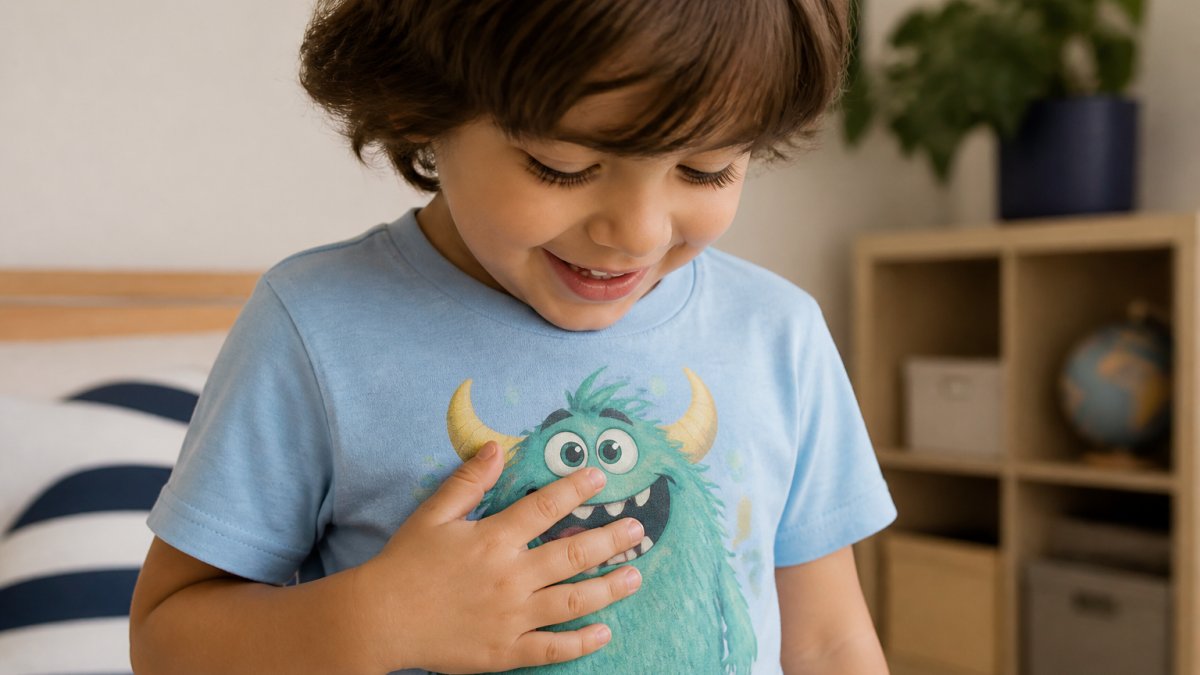
Embroidered designs feel raised and textured. Some kids love this, it adds interest and a premium feel.
The backing issue: Many parents don't realize that embroidered designs have a stabilizer backing, a stiff interfacing material stitched to the inside of the garment to support the thread weight.
Quality matters here. Well-made graphic tees use soft-hand ink that doesn't crack or feel stiff. Poor-quality printing creates a plastic-like texture that kids hate.
Seam and Label Irritation
Both graphic tees and embroidered shirts should have tear-away labels to prevent neck irritation. The real difference comes down to overall construction. Graphic tees are typically made from lightweight cotton that feels gentle on skin. Embroidered shirts sometimes use heavier fabric to support the weight of the stitching, which can feel less breathable.
For kids with sensitive skin or sensory sensitivities, a well-made graphic tee from soft cotton tends to be more comfortable. The flat design means nothing catches or irritates, and the fabric breathes well.
Kids Graphic Tee "Walabookies" Colorful Character Shirt →
Is Organic Cotton Graphic Apparel Worth It for Kids?
Organic cotton costs more than conventional cotton, but it's gentler on sensitive skin because it's grown without synthetic pesticides. For kids with eczema, allergies, or very reactive skin, organic cotton can make a real difference in comfort.
Graphic tees made from organic cotton offer the softness of organic fibers plus the flat, smooth design feel. This combination works especially well for toddlers and young children whose skin is still developing.
That said, organic cotton graphic tees cost more upfront than conventional options. The durability question becomes important: if the graphic fades after 20 washes, you're replacing the shirt frequently, which adds up. For kids who wear the same shirt constantly, investing in organic cotton makes sense.
Cost Comparison and Value
Graphic tees typically cost less to produce, so they're usually priced lower. A quality graphic tee runs between $15-$25. Embroidered shirts cost more because embroidery is labor-intensive and slower. Expect to pay $25-$40 for a well-embroidered design.
The value question depends on how long your child wears each shirt. If your 8-year-old rotates through five tees and each gets worn 1-2 times per week, a graphic tee works fine, the moderate wear means less fading.
The Kids Graphic Tee "Walabookies" Colorful Character Shirt starts at $18.82 and features soft Airlume combed and ring-spun cotton with a vibrant DTF print. For kids who prefer long sleeves, the Toddler Long Sleeve Tee, Colorful “Wlaboo-kies” Cartoon Kids Shirt is $28.80 and uses 100% combed, ring-spun cotton in solid colors with tear-away labeling for sensitive skin.

Design Complexity and Style Options
Graphic tees win on design complexity. You can print detailed artwork, gradients, photographic images, and intricate patterns that embroidery cannot replicate.
Embroidered designs work best with bold, simple artwork: solid-color logos, geometric patterns, and text. The raised stitching creates a classic, premium look that feels more sophisticated than printing.
For everyday wear and playful kids' fashion, graphic tees offer more variety. For dress-up events or classic, long-lasting pieces, embroidery feels more premium and intentional.
Which Should You Choose for Your Child?
| Factor | Graphic Tees | Embroidered Shirts |
|---|---|---|
| Design Detail | Excellent (photos, gradients, fine lines) | Limited (solid colors, bold shapes) |
| Durability | 20-30 washes before fading | 50+ washes, stays vibrant |
| Comfort | Smooth, flat feel; very soft | Raised texture; can irritate sensitive skin |
| Cost | $15-$25 | $25-$40 |
| Best For | Everyday wear, active play, sensitive skin | Special occasions, keepsakes, rotation wardrobes |
| Texture Appeal | Minimal; fabric-forward | High; kids notice the raised design |
Choose graphic tees if your child has sensitive skin, prefers smooth textures, or needs detailed, colorful designs. They're perfect for everyday rotation and active play because they're comfortable and affordable.
Choose embroidered shirts if your child will wear the piece frequently, you want maximum durability, or you're looking for a premium, keepsake-quality piece. Embroidery holds up to heavy washing and playground wear better than printing.
Many parents buy both: graphic tees for daily wear and embroidered pieces for special occasions or favorite designs that will be worn repeatedly.
Conclusion
The choice between graphic tees and embroidered shirts for kids comes down to comfort, durability, and design needs.
At Walabookies, we design our graphic tees with soft Airlume combed and ring-spun cotton and tear-away labeling specifically for kids' comfort and durability. Our collection includes playful, colorful designs that hold up to active wear.
REACH certification standards for textile safety ensure that materials used in kids' apparel meet strict safety standards.
Frequently Asked Questions
Is embroidery or screen printing better for kids' clothing?
Screen printing creates a smooth, flat design that feels soft against skin and works well for detailed artwork. For toddlers, graphic tees with soft-hand printing are often gentler. Graphic tees last well with proper care, so choice depends on your child's comfort preference and the design style you want.
How do I choose between graphic and embroidered designs for sensitive skin?
Graphic tees are typically better for sensitive skin because the design sits flat on the fabric surface. Look for garments with tear-away labels and reinforced seams that won't rub. Always check care instructions and wash new items before wearing to soften any stiffness in the design area.
What makes a graphic tee cool for kids?
Kids respond to bright, playful colors and characters that feel current and fun. Designs should match their interests, whether that's cartoon characters, bold graphics, or age-appropriate artwork. The fit matters too: a well-tailored tee that doesn't sag or bunch looks intentional rather than oversized. Quality fabric that feels soft and moves comfortably during play makes kids actually want to wear it. Graphic tees work best when the design quality is sharp and vibrant, not faded or dull.
Which decoration method lasts longer through repeated washing?
Graphic printing can last years with proper care. Direct-to-Film (DTF) printing on quality fabric holds color well through cold water washing. Graphic tees fade slightly faster in hot water or with bleach. For kids' clothes that endure heavy play and frequent washing, graphic printing holds up well with proper care.
Graphic tees vs embroidered shirts each solve different problems for different kids. Walabookies makes both options with quality construction and playful designs that kids actually want to wear. Browse our full collection of graphic tees and apparel to find pieces that match your child's style and comfort needs.