
Table of Contents
- What Is Organic Cotton and Why It Matters for Pajamas
- Health Benefits: Why Organic Cotton Pajamas Protect Sensitive Skin
- Is Organic Cotton Better for Eczema and Dermatitis
- Organic Cotton vs Bamboo Sleepwear: Which Works Best
- Durability, Breathability, and Care: What Makes Organic Cotton Last
- Best Laundry Detergents for Sensitive Baby Skin
- Certifications That Guarantee Quality: GOTS and OEKO-TEX Explained
- Cost-Per-Wear: Why Organic Cotton Pajamas Offer Real Value
- Frequently Asked Questions
Last Updated: September 23, 2026
What Is Organic Cotton and Why It Matters for Pajamas
Organic cotton is cotton grown without synthetic pesticides, herbicides, or genetically modified seeds. The fiber itself is identical to conventional cotton, what differs is how it's cultivated. Farmers use natural pest management, crop rotation, and composting instead of chemical inputs. This distinction matters for pajamas because the fabric touches your child's skin for 8-10 hours every night, directly against sensitive areas like the neck and underarms.
The certification process is rigorous. To qualify as organic, cotton must meet standards set by bodies like GOTS (Global Organic Textile Standard) or OEKO-TEX Standard 100, which verify the entire supply chain from farm to finished garment. No synthetic pesticides during growth. No heavy metals in dyes. No formaldehyde in processing. This matters because conventional cotton production uses roughly 16% of the world's insecticides despite occupying only 2.5% of global farmland, chemicals that can linger in fabric fibers even after manufacturing.
For kids' sleepwear, this translates to fewer irritants against delicate skin. Children's skin has a thinner outer barrier than adults', making them more vulnerable to chemical residues (pubmed.ncbi.nlm.nih.gov). Organic cotton pajamas eliminate that exposure from the start. At Walabookies, we've curated a collection that prioritizes this protection without compromising on the playful designs kids actually want to wear. The Cute Yellow Robot Baby Bodysuit, for example, combines GOTS and OEKO-TEX certification with breathable organic cotton that keeps babies comfortable through the night.

Health Benefits: Why Organic Cotton Pajamas Protect Sensitive Skin
Organic cotton reduces the risk of skin irritation because it contains no residual pesticides or synthetic dyes. When a child wears conventional cotton pajamas, they're exposed to trace amounts of chemicals used during cultivation and processing, including compounds that can trigger reactions in sensitive skin. Organic cotton eliminates this source of irritation entirely.
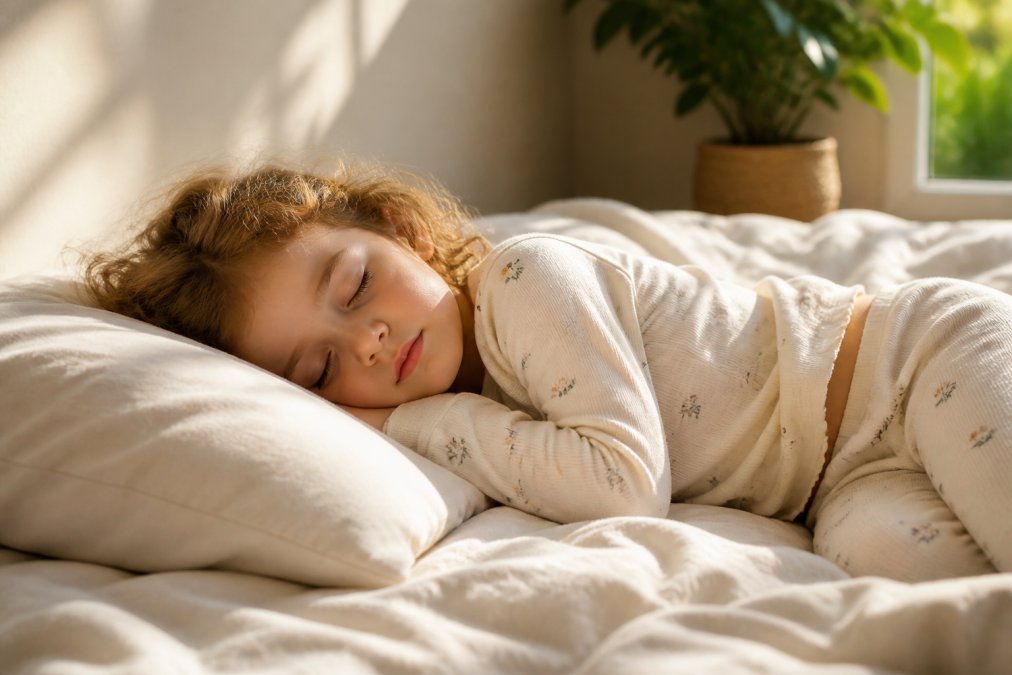
For kids with baseline sensitivity or reactive skin, this difference is measurable. The fabric itself feels softer because it hasn't been treated with chemical finishes designed to improve performance in conventional cotton. That softness is genuine, it comes from the fiber quality and careful processing, not from synthetic coatings.
Breathability is another health advantage. Organic cotton fibers retain their natural structure better because they're not exposed to aggressive chemical processing. This means better moisture-wicking, which prevents the sweat buildup that creates conditions for skin irritation and fungal growth. A child sleeping in organic cotton stays drier throughout the night, reducing friction against the skin.
Is Organic Cotton Better for Eczema and Dermatitis
Organic cotton is significantly better for children with eczema or dermatitis because it eliminates a major irritant source. Eczema-prone skin reacts to synthetic dyes, formaldehyde residues, and pesticide traces that remain in conventional fabrics. Organic cotton removes all three.
The mechanism is straightforward: eczema and dermatitis occur when the skin barrier is compromised, making it hypersensitive to irritants. Conventional cotton introduces irritants directly against compromised skin. Organic cotton doesn't. This doesn't cure eczema, nothing in sleepwear does, but it removes a consistent trigger that can worsen flare-ups.
The OEKO-TEX Standard 100 certification is particularly relevant here because it tests for 300+ harmful substances, including formaldehyde, heavy metals, and azo dyes. A child wearing OEKO-TEX certified pajamas is wearing fabric that has been tested to eliminate these irritants.
Organic Cotton vs Bamboo Sleepwear: Which Works Best
Organic cotton and bamboo viscose are the two most common natural fiber options for sensitive skin pajamas. Both are softer than conventional cotton, but they differ in durability, breathability, and environmental impact.
Bamboo viscose is slightly softer and more moisture-wicking than organic cotton. It drapes beautifully and feels luxurious against the skin. The downside: bamboo viscose pills more easily (creates those small fabric balls on the surface), and it weakens when wet, making it prone to tearing during washing.
Organic cotton is more durable. It strengthens when wet, meaning it can handle aggressive washing without degrading. For families buying multiple sets and washing frequently, organic cotton offers better cost-per-wear.
Breathability favors organic cotton in warm climates. Bamboo viscose retains more moisture, which can feel clammy in humid conditions. Organic cotton dries faster and regulates temperature more effectively across seasons.
| Attribute | Organic Cotton | Bamboo Viscose |
|---|---|---|
| Softness | High | Very High |
| Durability (washes) | 80-100 | 30-40 |
| Pilling resistance | Excellent | Poor |
| Breathability | Excellent | Good |
| Temperature regulation | Better across seasons | Better in cool climates |
| Environmental impact | Lower water use | Higher chemical processing |
For families with multiple children or hand-me-down expectations, organic cotton wins. For a single child who needs maximum softness and won't be reworn, bamboo viscose is acceptable if budget allows.
Cute Yellow Robot Baby Bodysuit →
Durability, Breathability, and Care: What Makes Organic Cotton Last
Organic cotton pajamas last longer than conventional cotton when cared for properly. The fiber structure is more resilient because it hasn't been weakened by aggressive chemical processing. This means less pilling, fewer tears, and better color retention through repeated washing.
Breathability in organic cotton comes from the natural fiber structure. Unlike synthetic fabrics or chemically finished cottons, organic cotton allows air to move freely through the weave. This keeps children cooler in summer and prevents moisture buildup that leads to overheating and discomfort.
Care matters enormously for longevity. Machine wash in cold water (30°C or 86°F maximum) because heat weakens organic cotton fibers and sets stains. Avoid bleach entirely, it degrades natural fibers faster than conventional cotton. Skip the dryer. Line-drying or air-drying preserves fiber integrity and prevents shrinkage.
The tear-away label and reinforced seams on quality organic cotton pajamas like Walabookies' Cute Yellow Robot Baby Bodysuit aren't cosmetic, they're engineered for durability. A child wearing pajamas 8-10 hours per night creates significant stress on seams and hems.
Best Laundry Detergents for Sensitive Baby Skin
The best detergents for organic cotton pajamas are fragrance-free, enzyme-free, and designed for sensitive skin. Avoid products with optical brighteners, which can irritate eczema-prone skin and degrade organic fibers over time.
Certifications That Guarantee Quality: GOTS and OEKO-TEX Explained
GOTS (Global Organic Textile Standard) is the most rigorous certification for organic cotton. It verifies that cotton is grown without synthetic pesticides, that processing uses approved chemicals only, and that the entire supply chain maintains organic integrity. A GOTS-certified garment has been tracked from farm to finished product.
Cost-Per-Wear: Why Organic Cotton Pajamas Offer Real Value
The upfront cost of organic cotton pajamas is higher than conventional options. A quality pair costs 40-60% more than mass-market alternatives. But cost-per-wear tells a different story.
Frequently Asked Questions
What are the benefits of wearing organic cotton pajamas?
Organic cotton pajamas eliminate exposure to synthetic pesticides and toxic residues used in conventional cotton production. They're hypoallergenic, breathable, and naturally moisture-wicking, which means better sleep quality and less skin irritation. GOTS and OEKO-TEX certifications guarantee the fabric was processed without harmful chemicals. For children with sensitive skin or dermatitis, organic cotton reduces the risk of reactions that trigger discomfort at night.
Is organic cotton really worth it compared to regular cotton?
Yes, when you calculate cost-per-wear. Organic cotton pajamas resist pilling, maintain softness through repeated washing, and last longer than conventional cotton. Beyond durability, organic cotton is made without synthetic pesticides, making it safer for children with sensitive skin and reducing your household's chemical exposure.
Is organic cotton better for eczema?
Organic cotton is significantly better for eczema-prone skin because it eliminates irritants that trigger flare-ups. Conventional cotton retains residues from synthetic pesticides and heavy metals used during growth and processing. Organic cotton, especially GOTS-certified options, is chemical-free and formaldehyde-free, reducing skin irritation and dermatitis.
How does organic cotton differ from bamboo sleepwear?
Organic cotton and bamboo viscose both offer breathability and softness, but differ in sustainability and processing. Organic cotton has superior pilling resistance and fiber strength, lasting longer through multiple washes. Bamboo is slightly more moisture-wicking but requires more careful laundering. For children with severe eczema or chemical sensitivities, organic cotton's chemical-free certification provides greater peace of mind.
What laundry detergents work best for organic cotton pajamas with sensitive skin?
Use fragrance-free, hypoallergenic detergents without dyes, optical brighteners, or enzymes. Gentle formulas designed for sensitive baby skin preserve the fabric's integrity and prevent irritation. Avoid bleach and fabric softeners, which leave residues on organic cotton and can trigger dermatitis. Wash in cold water (30°C or below) to maintain fiber strength and prevent shrinkage.
What certifications should I look for in organic cotton pajamas?
GOTS (Global Organic Textile Standard) certification guarantees the cotton was grown without synthetic pesticides and processed without harmful chemicals like formaldehyde or heavy metals. OEKO-TEX Standard 100 independently tests the finished product to confirm it's free of toxic residues. Both certifications are critical because organic cotton can be contaminated during processing if manufacturers don't follow strict protocols. A product with both GOTS and OEKO-TEX certification, like the Cute Yellow Robot Baby Bodysuit, assures you that every stage from farm to finish meets rigorous safety standards.
Do organic cotton pajamas shrink in the wash?
Quality organic cotton pajamas resist shrinkage when cared for properly. Machine wash in cold water (maximum 30°C) and air-dry to maintain fiber strength and prevent shrinkage. Avoid tumble drying and bleach, which weaken fibers and cause permanent shrinkage. Proper care extends the lifespan significantly, making the higher initial cost worthwhile through years of reliable fit and comfort.