
Table of Contents
- Why Teaching Children to Pick Their Own Outfits Matters
- How to Teach a Child to Dress Themselves: Age-by-Age Approach
- How to Organize Kids' Clothes for Easy Dressing
- How to Get Kids Dressed in the Morning Without Stress
- What to Do When a Child Refuses to Get Dressed
- Creating a Repeatable Outfit-Selection Routine
- Balancing Autonomy With Non-Negotiable Boundaries
- Practical Tips for Success
- Frequently Asked Questions
Last Updated: October 19, 2026
Why Teaching Children to Pick Their Own Outfits Matters
Learning to teach children pick outfits is one of the most valuable skills you can help them develop. When kids choose what they wear, they build confidence, independence, and decision-making abilities that extend far beyond the closet.
At Walabookies, we understand that getting dressed is about more than just clothes. It's a daily opportunity to let your child practice making choices, express their personality, and take ownership of how they present themselves to the world.
Beyond the obvious benefits, this habit teaches kids to think through practical decisions. They learn to match colors, consider the weather, and understand that different occasions call for different clothes.
The best part? When children feel ownership over their wardrobe, they're more likely to actually wear what you've bought them.
How to Teach a Child to Dress Themselves: Age-by-Age Approach
Teaching kids to dress themselves is a gradual process that looks different at each stage. The key is matching your expectations to what your child can actually handle at their age.
Ages 2-3: Simple Choices and Celebration
At this age, your toddler can start making very basic decisions. They're not ready for complex outfit selection, but they can choose between two simple options.
Offer two choices at a time:
- Two shirts in different colors
- Two pairs of pants
- Two pairs of shoes
Keep the choices simple and make sure both options work together. Your toddler might pick a bright red shirt or a soft blue one. Either choice is fine. What matters is that they're making the decision.
Celebrate their choice enthusiastically. Say things like, "You picked the red shirt! Great choice!" This builds confidence and shows them that their decisions matter.
At this stage, expect that getting dressed will take longer than if you just dressed them yourself. That's normal and worth the extra time. You're building a foundation for independence.
Ages 4-5: Building Confidence with Guidance
Four and five-year-olds can handle more responsibility. They can match basic colors and understand simple rules about clothing.
Start by letting them choose from a slightly larger set of options. Instead of two choices, offer three or four. But still make sure all options work together and are weather-appropriate.
Help them understand basic matching:
- "This blue shirt looks nice with these blue pants"
- "This purple dress goes well with these purple shoes"
- "When it's cold outside, we wear long sleeves"
Let them practice putting on their own clothes. They might button a shirt wrong or put their shirt on backward. That's okay. Help them fix it gently without taking over completely.
Use simple language to explain why certain combinations work. Kids this age can start understanding that some colors go together and that weather affects clothing choices.
Ages 6-8: Expanding Independence and Style
By this age, children can handle real outfit selection. They can understand more complex decisions and are developing their own sense of style.
Let them choose from their entire clean wardrobe. Give them one non-negotiable rule: the outfit must be weather-appropriate. Beyond that, let them decide.
Help them think through their choices:
- "It's going to be warm today. Do you want shorts or pants?"
- "We're going to Grandma's house. Do you want to wear something fancy or casual?"
- "Do you like how that shirt matches those pants?"
At this age, kids often have strong opinions about what they like. Support their developing sense of style, even if it's different from your taste. A child who feels their style is respected is more likely to stay engaged with getting dressed.
Introduce the concept of a outfit routine. Show them where clean clothes are kept and help them understand how to put together a complete outfit from top to bottom.
Ages 9+: Personal Style and Decision-Making
Older children should have significant control over their outfit choices. They're developing their own identity and using clothing as a form of self-expression.
Let them choose their entire outfit without your input unless there's a specific dress code or weather concern. They understand that different situations call for different clothes.
Discuss their choices occasionally, but frame it as conversation, not correction:
- "I notice you've been wearing a lot of blue lately. Do you really like blue?"
- "That's an interesting combination. Tell me why you picked those pieces together."
At this age, kids might want to shop for their own clothes. If possible, let them help choose new pieces. When they have input into what enters their wardrobe, they're more likely to wear it.
How to Organize Kids' Clothes for Easy Dressing
The way you organize your child's clothes directly affects how easily they can pick outfits.
Keep clean clothes accessible. Children should be able to reach their own drawers or closet without your help. Lower shelves and rods work best.
Organize by type, not by color:
- One drawer for shirts
- One drawer for pants
- One drawer for socks and underwear
This system helps kids find what they need without getting overwhelmed.
Remove items that don't fit or that your child never wears.
Consider using clear drawer dividers or labeled bins. Visual organization helps kids understand where everything goes and makes cleanup easier.
Keep special occasion clothes separate from everyday clothes. Store fancy dresses, holiday outfits, and formal wear in a different location.
Rotate seasonal clothes. During winter, store summer clothes away. During summer, pack up heavy sweaters. This keeps the available options manageable.
How to Get Kids Dressed in the Morning Without Stress
Morning stress around getting dressed is one of the biggest complaints from parents, yet teaching children pick outfits can eliminate much of it.
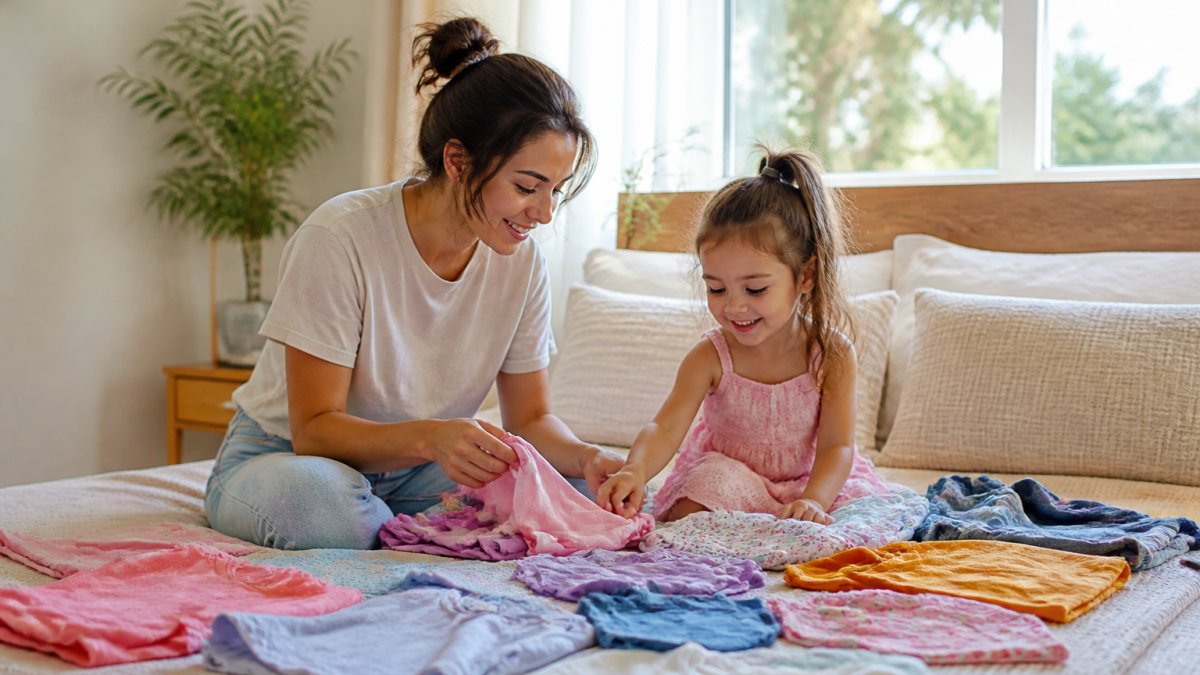
Start the night before. Have your child pick out their outfit before bed. This removes the decision-making pressure from the morning rush.
Set a specific time for getting dressed. Make it part of your morning routine, like brushing teeth or eating breakfast.
Lay out the outfit they've chosen. Put the shirt, pants, and shoes in one spot.
Praise effort, not perfection. If your child's shirt is on backward but they got dressed on time, that's a win.
Break getting dressed into steps:
- First, put on your underwear
- Next, put on your shirt
- Then, put on your pants
- Finally, put on your shoes
Clear steps help kids understand what comes next and feel like they're making progress.
Kids Graphic Tee "Walabookies" Colorful Character Shirt →
What to Do When a Child Refuses to Get Dressed
Some days, your child will refuse to get dressed. This is normal and happens to every parent.
Stay calm and don't turn it into a power struggle.
Understand why they're refusing. Are they:
- Uncomfortable in the clothes they picked?
- Tired or hungry?
- Overwhelmed by the choices?
- Seeking attention or control?
Once you understand the reason, you can address it.
If the clothes are uncomfortable, listen to their concern. Maybe the shirt feels scratchy or the pants are too tight.
If they're tired or hungry, address that first. A hungry child won't cooperate with anything, including getting dressed.
If they're overwhelmed, reduce the choices. Go back to offering two options instead of letting them choose from everything.
If they're seeking control, give them a choice within boundaries: "You can wear the blue shirt or the red shirt.
Avoid power struggles by staying matter-of-fact.
Sometimes, you need to just get it done.
Creating a Repeatable Outfit-Selection Routine
A routine takes the stress out of outfit selection. When kids know the process, they move through it faster and with less resistance.
Create a simple three-step process:
Step 1: Check the weather. Look outside or check a weather app together. Is it hot or cold? Will it rain? This gives your child a practical framework for their choice.
Step 2: Choose a top. Let them pick a shirt or dress from their available options. Remind them of the weather if needed.
Step 3: Choose bottoms and shoes. Have them pick pants or a skirt and shoes that work with their top.
Practice this routine every morning for a week.
Make it a game if that helps. Time them: "Can you pick an outfit in five minutes?" Celebrate when they succeed.
Use visual reminders. Draw simple pictures showing the three steps and post them where your child gets dressed.
Let them lead the process as much as possible.
Balancing Autonomy With Non-Negotiable Boundaries
Giving your child freedom to choose their outfits doesn't mean anything goes. You still need boundaries.
Decide what's non-negotiable:
- Clothes must be weather-appropriate
- Clothes must be clean
- Clothes must fit reasonably well
- Some situations have dress codes (school, special events)
Communicate these boundaries clearly. Your child should know the rules before they get dressed.
Within those boundaries, let them have complete freedom.
Be consistent with your boundaries. If you say "no wearing pajamas to school," stick to that every day. Inconsistency confuses kids and creates arguments.
Explain the "why" behind your boundaries. Kids are more likely to accept rules when they understand the reason.
Pick your battles. If your child wants to wear stripes with polka dots, let them. It's not hurting anyone. Save your energy for the boundaries that really matter.
Remember that your child's style might look different from yours, and that's okay. Supporting their self-expression builds confidence and independence.
Practical Tips for Success
Start small. If your child has never chosen their own outfit, don't expect them to do it perfectly on day one.
Use Walabookies pieces that are easy to mix and match. Quality basics in solid colors and fun graphic tees give kids lots of options without overwhelming them. Our Kids Graphic Tee "Walabookies" Colorful Character Shirt pairs easily with any bottoms, and our Kids' Hooded Sweatshirt works for casual days and layering.


Take photos of outfits your child loves. Create a simple visual guide of combinations that work.
Involve your child in laundry. Let them help fold and put away their own clothes.
Don't stress about perfection. Some days your child will pick an outfit that doesn't match perfectly. That's fine.
Celebrate progress. When your child gets dressed without complaining, acknowledge it.
Remember that this is a skill that develops over time. Some children take longer than others to feel confident making choices.
Teaching your child to pick their own outfits builds independence and confidence that extends far beyond the closet.
Frequently Asked Questions
At what age should children start choosing their own clothes?
Children can begin making simple clothing choices as early as age 2-3 with two limited options presented by a parent. By ages 4-5, most kids can handle slightly more complex decisions with guidance. Around age 6-8, children typically develop stronger preferences and can select outfits with minimal help. By age 9 and up, many children are ready for greater independence in building their personal style. Start small and build gradually based on your child's readiness and confidence level.
How can I teach a child to dress themselves without morning arguments?
Reduce conflict by establishing a predictable routine the night before. Offer two acceptable outfit choices rather than unlimited options. Use a timer to make it a game and keep things moving. Praise effort and choices, not perfection. When kids have practiced this skill and feel ownership of their choices, morning resistance typically decreases. Keep boundaries clear: they choose the outfit, but weather-appropriate items are non-negotiable. Colorful, playful pieces like Walabookies' graphic tees and hoodies make getting dressed feel fun rather than like a chore.
How do I let my child choose clothes while making sure they're dressed for the weather?
Set non-negotiable weather-appropriate boundaries before offering choices. For example, on a cold day you might say, 'It's freezing today, so you need a warm layer. Would you like the hoodie or the jacket?' This way your child still picks their outfit within safe limits. You control the available options by what you display or suggest, so organize the wardrobe seasonally. Keep heavier pieces accessible in winter and lighter options visible in summer. This approach teaches decision-making while protecting them from discomfort or health risks.
What should I do if my child refuses to get dressed?
Stay calm and avoid power struggles. First, understand why they're refusing: Is the clothing uncomfortable? Are they overwhelmed by choices? Are they seeking attention? Address the root cause. If sensory issues exist, focus on soft, comfortable fabrics. If they're overwhelmed, reduce options to two items. Use positive framing: 'Let's pick something fun to wear' rather than commands. Sometimes stepping back and letting natural consequences teach helps, they'll feel the cold or discomfort and adjust next time. Consistency matters more than a single response. Walabookies' soft cotton and fleece pieces are designed for comfort, which can reduce resistance from kids with sensitive skin.