
Table of Contents
- How to Style Trendy Kids Fashion: Start With These 3 Rules
- Stylish Clothes for 3 Year Olds: What Actually Works
- How to Build a Capsule Wardrobe for Kids on a Budget
- Tips for Mixing Patterns in Kids Fashion Without the Chaos
- Sensory-Friendly and Gender-Natural Styling That Kids Actually Wear
- Sustainable Choices: Upcycling and Fast Fashion Alternatives
- Special Occasion Wear and Matching Family Outfits
- Conclusion: Styling Kids Fashion That Lasts Beyond One Season
- Frequently Asked Questions
Last Updated: October 4, 2026
How to Style Trendy Kids Fashion: Start With These 3 Rules
Learning how to style trendy kids fashion starts with three rules: let comfort lead, build the outfit around one statement piece, and check the fit first.
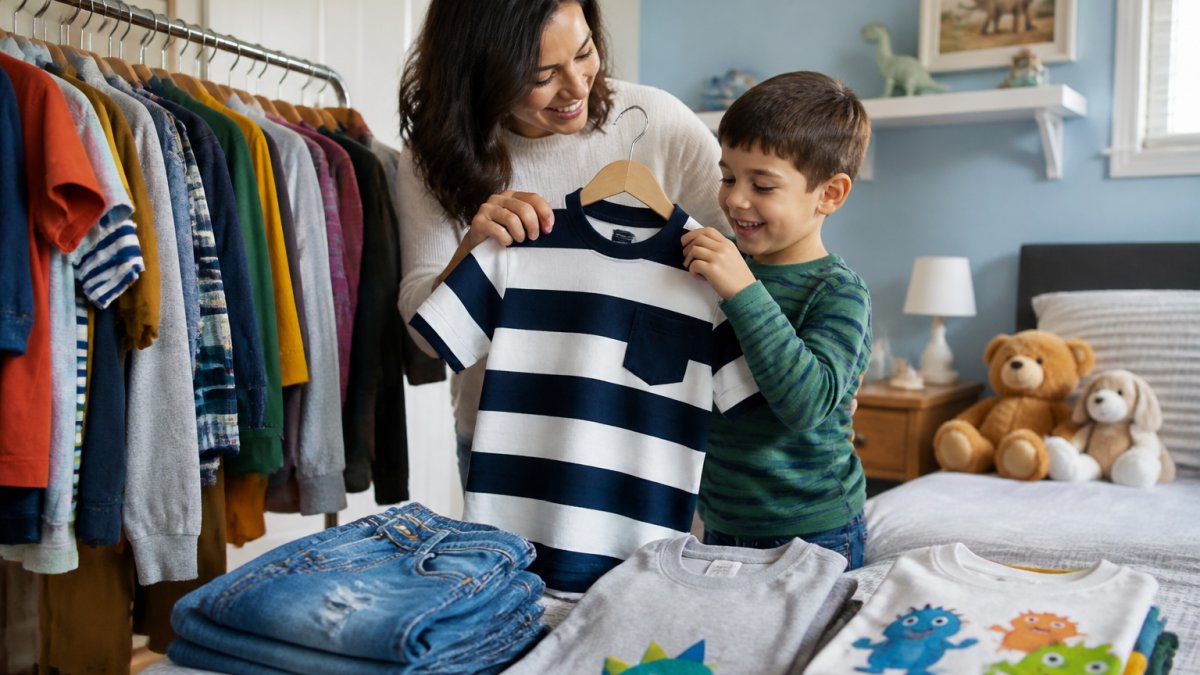
These rules matter more than any trend list: kids move constantly, and clothes that pinch or slip get pulled off fast.
Here is a quick map of what this article covers:
| Rule | Why It Works | Quick Check |
|---|---|---|
| Comfort leads | Kids keep wearing it | Soft seams, no scratchy tags |
| One statement piece | Rest of outfit stays calm | One bold print per look |
| Fit and sizing | Prevents returns and refusals | Room to move at shoulders |
Rule 1: Let Comfort Lead the Outfit
Comfort is the deciding factor, not the last check. Start with the fabric against the skin: soft cotton blends, flat seams, and tear-away labels, since scratchy tags are a common reason kids refuse a shirt.
- Soft cotton or cotton blend over stiff fabric
- Flat seams and covered stitching
- Tear-away or printed labels instead of plastic tags
Rule 2: Build Around One Statement Piece
Pick one bold item, then keep everything else simple. A loud graphic tee with plain jeans reads better than three competing prints.

Rule 3: Keep Fit and Sizing in Check
Sizing decides whether an outfit survives the day. Too tight and it gets pulled at; too loose and it slides around during play. Measure once, write it down, and recheck every few months, since heights and weights shift fast in the toddler years.
Stylish Clothes for 3 Year Olds: What Actually Works
Stylish clothes for a 3 year old work best when they are easy to put on alone. Toddlers want to dress themselves, and clothes that fight back cause meltdowns.
That means stretchy waists, wide neck openings, and no tricky fasteners. If a 3 year old can pull it on without help, it gets worn far more often.
Easy-On Pieces for Toddler Independence
The best toddler pieces stretch, open wide, and skip buttons small fingers can't work.
- Pull-on pants with elastic waists
- Long-sleeve tees with ribbed collars that hold shape
- Hoodies with side pockets for small hands
The American Academy of Pediatrics guidance on dressing independence notes that letting toddlers practice dressing builds fine motor skills, so easy-on pieces double as learning tools.
Our Toddler Long Sleeve Tee is built for exactly this stage.

Layering Techniques for Changing Weather
Layering keeps a toddler comfortable when the day shifts from cool to warm. Use thin layers you can peel off one at a time: a lightweight base tee, then a hoodie or sweatshirt. Skip bulky coats for mild days, since toddlers overheat fast once they start running.
How to Build a Capsule Wardrobe for Kids on a Budget
A capsule wardrobe for kids is a small set of pieces that all match each other. Ten items can create weeks of outfits, cutting both cost and morning stress. A tight palette of two or three base colors plus a few graphic pieces covers school, play, and weekends, every item earns its place, so you buy less when sizes change.
The 10-Piece Starter List
Here is a starter list that covers most days. Adjust the counts for your climate and laundry schedule.
- 3 plain tees in solid colors
- 2 graphic tees for personality
- 2 pairs of jeans or pull-on pants
That is ten pieces. Add socks and one pair of shoes and you have a full rotation.
Where to Save Without Looking Cheap
The biggest budget wins come from how you buy, not just what you buy. Split the capsule into two tiers: durable basics bought new, and trend pieces bought secondhand or on clearance.
- Buy plain tees, pants, and hoodies new in neutral colors, these get the most wear and need to survive washes.
- Buy graphic tees and statement pieces secondhand, at consignment sales, or on clearance at the end of a season for the next size up.
- Skip trend-driven shoes and accessories until you know your child will actually wear them.
This keeps cost per wear low: daily pieces last, while fun pieces rotate in and out without a big spend.
How to Adapt the Capsule as Kids Grow
A capsule isn't static. Kids move up a size every few months in the toddler years and every season or two in the big-kid years. Replace one category at a time instead of rebuying the whole drawer.
- When pants get short, replace only the pants and keep the tops.
- When a growth spurt hits, size up in the layering pieces first, hoodies and long-sleeve tees, since those are worn over everything.
- Store outgrown pieces by size, not by season, so the next kid or the next growth spurt has a ready supply.
Mix and Match Combinations That Stretch Further
The math works because every top matches every bottom: three plain tees and two graphic tees pair with two pants and a skirt for a full set of looks.
Our Kids Graphic Tee fits this system well. It is lightweight cotton with side seams and shoulder tape, so it holds shape through repeated wear and washes, and the playful character designs give kids a reason to reach for it.
Tips for Mixing Patterns in Kids Fashion Without the Chaos
Mixing patterns works when one pattern leads and the others stay quiet. Pick a bold print, then pair it with stripes or solids in the same color family. Two loud prints fight each other; one loud print plus one subtle pattern looks intentional.
The Scale Rule: Big Print, Small Print
The easiest way to mix patterns without a fight is to vary the scale. A large graphic or big polka dot pairs well with a small, tight pattern like thin stripes or tiny dots.
Kids Graphic Tee "Walabookies" Colorful Character Shirt →
- Large graphic tee + thin-striped leggings
- Big floral skirt + small-dot top
- Wide-striped hoodie + solid pants
A simple test: squint at the outfit. If the two patterns blur into one busy texture, swap one for a solid.
Color Coordination Basics for Busy Parents
Color coordination comes down to picking a base and repeating it. If the shirt has blue in it, pull blue from the pants or socks.
- Choose one base color and one accent color
- Repeat the accent in small doses, like socks or a hat
- Keep shoes neutral so they match everything
A useful shortcut is the 60-30-10 split: about 60% of the outfit in the base color, 30% in a secondary color, and 10% in an accent.
Pattern Mixing for Sensory-Sensitive Kids
Some kids reject patterns not for how they look but for how they feel. Printed fabrics, especially thick screen-print graphics, can feel stiff or scratchy.
- Choose graphics printed with soft, water-based inks rather than thick plastic-feel transfers.
- Look for patterns woven into the fabric rather than printed on top.
- Pair a patterned top with a soft, tagless solid bottom to keep the touch experience calm.
A gender-neutral approach helps here too: skip the boys' and girls' labels and pick patterns and colors the kid likes, and you get more outfits that actually get worn.
Sensory-Friendly and Gender-Natural Styling That Kids Actually Wear
Sensory-friendly clothing removes what kids complain about most: scratchy tags, thick seams, and stiff fabric. Gender-neutral styling skips the boy and girl labels and picks what fits the kid. Both solve the same problem, kids wear what feels good and what feels like them.
Tags, Seams, and Fabrics That Pass the Touch Test
The touch test is simple: rub the inside of the shirt against your wrist before you buy. If it scratches you, it will scratch a child.
- Tear-away labels or tagless prints
- Flatlock or covered seams instead of raised ones
- Soft cotton blends over stiff synthetics
Building a Wardrobe That Works for Any Kid
A flexible wardrobe skips the boys' and girls' sections and focuses on fit and color. Stock basics in colors any kid can wear, then let them pick the graphic pieces. Clothes also pass between siblings more easily when nothing is coded to one kid.
Sustainable Choices: Upcycling and Fast Fashion Alternatives
Sustainable kids' fashion means buying fewer, better pieces and passing them on. Kids outgrow clothes fast, so durability matters more than volume.
The Ellen MacArthur Foundation report on textile waste explains how clothing waste adds up quickly when items are worn only a short time. Kids' clothes are a big part of that problem because they are outgrown so fast.
How to Make Hand-Me-Downs Look Intentional
Hand-me-downs look planned when they match the rest of the wardrobe. Stick to the same color palette so a passed-down piece blends in.
- Keep the palette consistent across kids
- Repair small holes before they spread
- Pass graphic tees down as play clothes
Our Kids' Hooded Sweatshirt holds up well for passing down. It uses midweight cotton-poly fleece with twill necktape and a kangaroo pocket, so it keeps its shape through many washes.

Special Occasion Wear and Matching Family Outfits
Special occasion wear should still let kids move. A stiff outfit that looks great in photos often ends in tears before the cake is cut.
Pick one dressy piece and keep the rest comfortable. A nice top with soft pants works for most events.
Matching family outfits are easier than they look.
- Same color, different styles
- Matching graphic tees for photos
- One shared accent, like a hat or socks
Our Kids Graphic Tee works as a family match piece.
Conclusion: Styling Kids Fashion That Lasts Beyond One Season
The hardest part of kids' fashion is that nothing fits for long. Walabookies makes that churn easier with pieces built to last and pass down: tees and hoodies with tear-away labels, reinforced seams, and soft cotton blends that hold up through washes, plus playful character designs kids actually want to wear.
Continue shopping with Walabookies and find pieces your kids will reach for again and again.
Frequently Asked Questions
How do you mix and match trendy kids outfits without buying a whole new wardrobe?
Start with neutral base pieces like plain tees and jeans, then add two or three colorful statement items. A graphic tee from Walabookies, for example, pairs with almost any bottom because the cartoon design already carries the visual interest. Rotate three tops across two bottoms and you get six outfits from five pieces, which keeps mornings simple and your spending low.
What should I look for in stylish clothes for a 3 year old?
Prioritize soft fabrics, easy-on closures, and room to move. Combed ring-spun cotton and ribbed cuffs hold shape through repeated washes, which matters when toddlers change outfits twice a day. Look for tear-away labels to prevent itching, and check sizing charts carefully since toddler fits vary between brands. A lightweight long-sleeve tee layered under a hoodie covers most weather without bulk.
How many pieces do I need for a kids capsule wardrobe?
Around ten core pieces works well for most children: three tops, two bottoms, one layer like a hoodie, one special occasion outfit, and three pairs of socks or accessories. Choose versatile pieces that mix easily, and stick to two or three colors so everything coordinates. This approach cuts decision fatigue, reduces laundry pressure, and makes it obvious when something no longer fits.
How can I make my child's wardrobe more sustainable without spending more?
Buy fewer, sturdier pieces and pass them down or swap with other families. Check fabric durability before buying: medium-weight fleece and reinforced seams survive more washes than thin fast-fashion alternatives. Upcycling also helps, like turning a too-short tee into a layering piece under overalls.