
Table of Contents
- Understanding Developmental Stages of Kids Styles
- Stylish Clothes for 3 Year Old: Balancing Fun and Function
- How to Build a Kids Capsule Wardrobe That Works
- Navigating School Dress Codes and Grooming Standards
- Sensory-Friendly and Comfort-Focused Style Choices
- Involving Kids in Choosing Their Own Personal Style
- Managing Budget, Trends, and Clothing Durability
- Conclusion: Building Confidence Through Age-Appropriate Style
- Frequently Asked Questions
Last Updated: September 28, 2026
Understanding Developmental Stages of Kids Styles
Learning how to find age appropriate kids styles starts with one honest admission: children do not dress for the same reasons adults do. A toddler wants soft fabric and freedom to move. A ten-year-old wants to look like their friends. Treat those as the same problem and every shopping trip turns into a negotiation.
Toddler Years (Ages 2-4): Comfort and Exploration
At this stage, clothing is equipment. Toddlers crouch, crawl, tumble, and spill, often within the same hour. Elastic waistbands, soft cotton, and roomy cuts matter far more than any trend.
Early Elementary (Ages 5-7): Independence and Expression
By five or six, children develop clear preferences. They will reject a shirt for reasons that seem arbitrary to you but are entirely logical to them, often colour, texture, or a character they have gone off.
Tweens (Ages 8-12): Peer Influence and Identity
Peer influence peaks here. Tweens use clothing to signal belonging, and a garment that reads as "babyish" to their classmates will stay in the drawer no matter how well it fits.
| Stage | What Matters Most | What to Avoid | Your Role |
|---|---|---|---|
| Toddler (2-4) | Soft fabric, easy on/off | Tight fastenings | Set up for success |
| Early elementary (5-7) | Choice within limits | Full open wardrobe | Offer 2-3 options |
| Tweens (8-12) | Peer approval, fit | Babyish prints | Guide fit and budget |
Stylish Clothes for 3 Year Old: Balancing Fun and Function
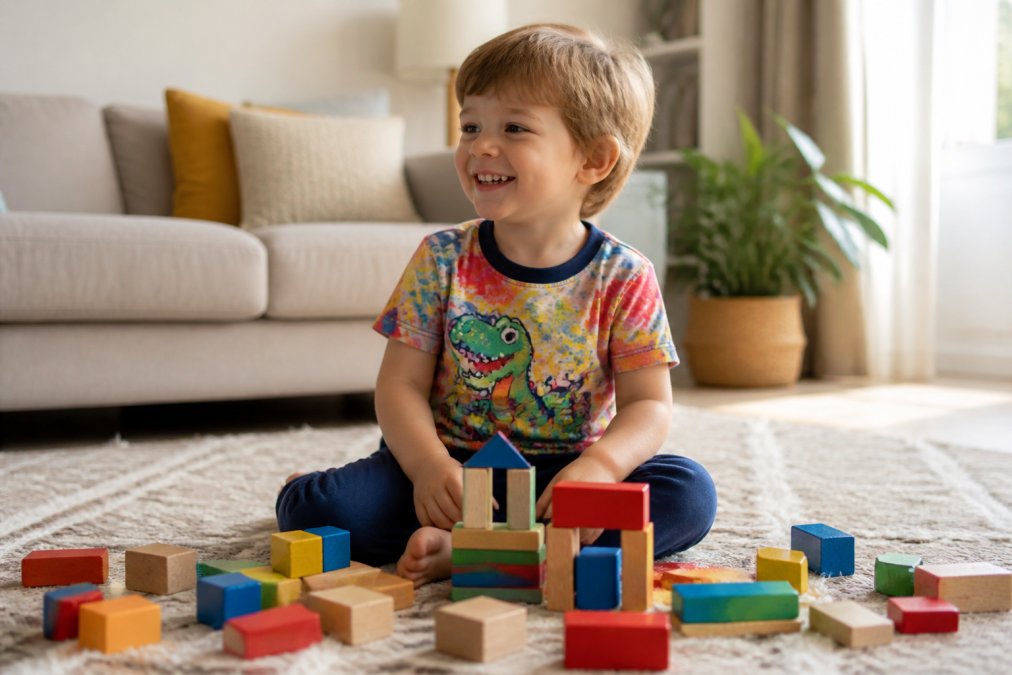
Stylish clothes for a 3 year old work best when they are playful on the surface and practical underneath. Bright prints and cartoon graphics get a child excited to wear something; soft cotton and stretchy waistbands keep them comfortable once they do.
How to Build a Kids Capsule Wardrobe That Works
A kids capsule wardrobe is a small, coordinated set of clothing where most pieces mix with each other, which cuts morning decisions and reduces wasted spending on items that never get worn. For children, the target is roughly 25 to 35 items per season, including tops, bottoms, layers, and shoes.
- Count current favourites. Note the colours and cuts they wear most.
- Choose a colour palette. Two or three base colours plus one accent keeps everything compatible.
- Set a target number per category. Around 8 tops, 5 bottoms, 3 layers, and 3 pairs of shoes per season suits most children.
- Test the combinations. Every top should work with at least three bottoms.
- Retire the rest. Store or pass on anything that fails the fit or comfort test.
Essential Pieces for a Capsule Wardrobe
- 8 tops, split between plain staples and graphic tees
- 5 bottoms, including at least two with elastic waists
- 3 layers: a hoodie, a light jacket, and a cardigan or sweatshirt
- 3 pairs of shoes for different weather and school requirements
- 1 outfit set aside for occasions, kept out of daily rotation
A capsule built this way also makes size transitions easier. When a growth spurt hits, you replace the pieces that no longer fit rather than rebuilding an entire wardrobe.
Navigating School Dress Codes and Grooming Standards
School dress codes vary widely, and the details matter more than the general principle. Most schools publish a written policy covering hem lengths, sleeve requirements, logos, footwear, and hair. Read that document before you shop, not after. A common mistake is buying a full school wardrobe in August only to discover in September that the school prohibits certain colors, logos, or styles.
What to Look For in a Dress Code Policy
Dress codes typically address several categories:
- Tops: Sleeve length, neckline, logos, and whether shirts must be tucked in.
- Bottoms: Hem length, fabric type (no denim, no sweatpants), and fit.
- Footwear: Closed-toe vs. open-toe, heel height, and whether sneakers are allowed.
- Hair and grooming: Length, color, accessories, and facial hair for older students.
- Accessories: Hats, jewelry, bags, and outerwear.
Some schools enforce a strict uniform, while others have a relaxed dress code with broad guidelines. The key is to know which category your child's school falls into before you spend money.
Grooming Standards and Hair
Grooming standards sit alongside dress codes and are often overlooked. Some schools set rules on hair length, color, or accessories, while others leave it open. Where a policy exists, explain the reasoning to your child rather than simply enforcing it; children accept limits far more readily when they understand the purpose.
Involving Your Child in Dress Code Decisions
Children are more likely to comply with dress codes when they understand the why behind them. Try these steps:
Kids Graphic Tee "Walabookies" Colorful →
- Read the policy together. Highlight the sections that affect daily choices.
- Ask your child what they think. They may have insights about how the rules are enforced in practice.
- Identify the non-negotiables. Explain which rules are firm and which have some flexibility.
- Shop with the policy in hand. Bring a copy when shopping so you can check items against the rules.
- Review after the first week. Adjust as needed once you see what actually works in the school environment.
When Dress Codes Conflict with Comfort or Sensory Needs
Some children have sensory sensitivities that make certain dress code requirements difficult, such as tucked-in shirts or stiff collars. In these cases, talk to the school about accommodations. Many schools are willing to make exceptions for documented sensory needs, especially if you provide a note from a pediatrician or occupational therapist.
Sensory-Friendly and Comfort-Focused Style Choices
Sensory-friendly clothing is designed to reduce the physical triggers that make some children uncomfortable, including scratchy seams, tight waistbands, and stiff fabric. For a child with sensory sensitivities, comfort is not a preference; it decides whether a garment gets worn at all.
Practical adjustments make a real difference:
- Look for tear-away or printed labels instead of sewn-in tags
- Choose flat seams and soft cotton over stiff synthetics
- Prefer elastic waistbands to buttons and zips
- Wash new items before wearing to soften the fabric
Involving Kids in Choosing Their Own Personal Style
Children who help choose their clothes wear them more willingly, and the effect compounds as they get older. The goal is not to hand over full control but to give real choices inside boundaries you set.
Try this approach:
- Set the limits first. Budget, dress code, and weather are non-negotiable.
- Let them choose within those limits. Two or three options is enough for younger children.
- Shop together when you can. Even browsing a catalogue builds decision-making skills.
- Respect reasonable preferences. If they hate a colour, believe them.
- Review together each season. Ask what worked and what did not.
Managing Budget, Trends, and Clothing Durability
Trend cycles move faster than children grow, so buying heavily into any single trend rarely pays off. A better strategy is to spend on the pieces worn most often and treat trend items as occasional additions.
| Problem | Likely Cause | Fix |
|---|---|---|
| Shrinking after wash | High heat drying | Wash cold, dry low |
| Faded prints | Hot wash, harsh detergent | Cold wash, inside out |
| Stretched necklines | Thin collars, no shoulder tape | Choose ribbed collars with tape |
| Seams splitting early | Weak stitching | Look for coverstitching |
Conclusion: Building Confidence Through Age-Appropriate Style
Finding age appropriate kids styles comes down to matching clothing to your child's stage rather than to a trend cycle. Toddlers need comfort and independence, early elementary children need guided choice, and tweens need room to fit in without losing their own taste. Get that balance right and shopping stops being a battle.
Frequently Asked Questions
At what age should kids start choosing their own clothes?
Most children can start making simple clothing choices around age 3, picking between two options you've preselected. By ages 5-7, they can handle more autonomy, like choosing their outfit for the day from a curated selection. Tweens (8-12) often want full control over their personal style. Start small: offer choices within boundaries you set, like picking between two age appropriate kids styles that both work for the weather and occasion.
How do I find stylish clothes for a 3-year-old that aren't too grown-up?
Focus on comfort-focused, functional clothing with playful details. Look for soft fabrics, easy on-and-off features like elastic waistbands, and designs that celebrate childhood rather than mimic adult fashion. Bright colors, cartoon graphics, and simple silhouettes work well. Brands like Walabookies offer toddler pieces designed specifically for this stage, with soft cotton blends and reinforced seams that hold up to playtime while keeping the look fun and age-appropriate.
What are the signs that a clothing style is not age-appropriate?
Watch for styles that prioritize adult aesthetics over comfort and movement, like restrictive fabrics, complicated fastenings, or designs that sexualize young children. If your child can't play freely, use the bathroom independently, or feels uncomfortable, the style isn't right. Also consider school dress codes and grooming standards. Age-appropriate kids styles should support self-expression while respecting developmental needs and social norms for their age group.
How can I build a kids capsule wardrobe without breaking the budget?
Start with 10-15 versatile pieces per season in a cohesive color palette. Choose durable fabrics that survive frequent washing. Mix affordable basics with a few quality statement pieces. Focus on wardrobe staples like plain tees, well-fitting jeans, and a neutral hoodie. When you learn how to build a kids capsule wardrobe, you buy less but choose better, which saves money long-term. Walabookies hoodies and tees, for example, use durable materials designed to hold shape and color through repeated wear.