
Table of Contents
- Why Laundry Detergent Matters for Babies with Sensitive Skin
-
Laundry Detergent Ingredients to Avoid for Babies
- How to read a detergent label like a parent, not a chemist
- Fragrance: the most common trigger
- Dyes: aesthetic, not functional
- Surfactants: the workhorses, and the variability
- Enzymes: effective stain fighters with a caveat
- Preservatives and optical brighteners: the hidden extras
- A practical comparison framework
- Is Baby Detergent Necessary or Can You Use Regular Detergent?
- How to Wash Baby Clothes for Sensitive Skin
- What to Look for in a Baby-Safe Laundry Detergent
- Special Considerations for Eczema and Diagnosed Allergies
- Keeping Your Baby's Clothes Fresh and Clean
- Frequently Asked Questions
Last Updated: October 8, 2026
Why Laundry Detergent Matters for Babies with Sensitive Skin
A baby's skin is thinner and more permeable than adult skin, so detergent residue on clothing can trigger rashes, redness, or discomfort.
At Walabookies, we know parents want clothing that feels as good as it looks, and that starts with how you care for it.
Detergent choice also affects longevity: harsh chemicals break down fibers, while a gentle approach preserves the pieces you've invested in.
Laundry Detergent Ingredients to Avoid for Babies
Most guides say "avoid harsh chemicals" without explaining what that means on a label. More useful: compare ingredients by category, what each does, why it irritates, how it appears on a label, and the gentler alternative.
How to read a detergent label like a parent, not a chemist
Detergent ingredient lists aren't standardized like food labels, some brands list every component, others group them under vague terms. That's why a category-by-category comparison beats memorizing a "bad" list.
Scan for five categories in order: fragrance, dyes, surfactants, enzymes, and preservatives. Transparency about all five is a good sign; vague terms are a yellow flag.
Fragrance: the most common trigger
Fragrance is the most frequent cause of contact dermatitis from laundry products. "Fragrance" or "parfum" can represent dozens of undisclosed compounds, and that opacity is the problem for sensitive skin.
- What it does: masks the natural smell of surfactants and leaves a scent on fabric.
- Why it irritates: fragrance compounds are small molecules that can penetrate a baby's thinner skin barrier and trigger an immune response.
- Label terms: fragrance, parfum, essential oil blends, "natural fragrance."
Parents often switch to "unscented" and see no improvement, because unscented products may add masking fragrance. Fragrance-free is the clearer standard.
Dyes: aesthetic, not functional
Dyes serve no cleaning purpose, they only color the product, and are an unnecessary exposure for a baby's skin.
- What they do: color the product.
- Why they irritate: some children develop itching or localized rashes within hours of wearing dyed clothing, especially in snug areas like waistbands and cuffs.
- Label terms: CI numbers (e.g., CI 42090), "colorant," "dye."
Surfactants: the workhorses, and the variability
Surfactants lift dirt and oil from fabric and are essential to cleaning, but the category ranges from harsh sulfates to gentler plant-derived options.
- What they do: surround dirt particles and suspend them in water so they rinse away.
- Why they irritate: sulfates such as sodium lauryl sulfate (SLS) can strip natural oils from skin and disrupt the skin barrier. This is more of a concern with direct skin contact, but residue on fabric can still matter for babies with compromised barriers.
- Label terms: sodium lauryl sulfate, sodium laureth sulfate, linear alkylbenzene sulfonates.
Enzymes: effective stain fighters with a caveat
Enzymes break down protein, starch, and fat stains, highly effective on milk, spit-up, and food. The caveat: enzymes are proteins themselves and can trigger reactions in susceptible babies.
- What they do: digest specific stain types (protease for protein, amylase for starch, lipase for fat).
- Why they irritate: in babies with diagnosed allergies or eczema, enzyme residues may contribute to skin reactions. This is not universal; many babies tolerate enzymes without issue.
- Label terms: protease, amylase, lipase, cellulase, "enzyme blend."
Preservatives and optical brighteners: the hidden extras
Preservatives prevent bacterial growth in liquid detergents; optical brighteners create a visual whitening effect. Neither is essential for cleaning.
- What they do: preservatives extend shelf life; brighteners create a visual whitening effect.
- Why they irritate: some preservatives, such as methylisothiazolinone, are known contact allergens. Optical brighteners can accumulate on fabric over multiple washes, increasing skin contact.
- Label terms: methylisothiazolinone, benzisothiazolinone, "optical brightener," "fluorescent whitening agent."
A practical comparison framework
Instead of memorizing ingredients, use this four-question test:
- Does it disclose fragrance components or state fragrance-free?
- Does it list dyes or state dye-free?
- Does it name its surfactants, or hide behind "cleaning agents"?
- Does it disclose enzymes and preservatives?
Clear answers to all four matter more than marketing claims like "natural" or "hypoallergenic," neither of which is strictly regulated.
Is Baby Detergent Necessary or Can You Use Regular Detergent?
The short answer: dedicated baby detergent isn't strictly necessary, but it's often the safer choice for sensitive skin.
Regular detergents handle many stains and fabrics, but that versatility means more additives, higher surfactant concentrations, and fragrance compounds that may irritate delicate skin.
The real consideration is your baby's skin. If your child has never shown sensitivity, no rashes, redness, or unexplained fussiness, a high-quality regular detergent labeled hypoallergenic may work fine.
How to Wash Baby Clothes for Sensitive Skin
Water temperature and rinse cycles
Washing technique matters as much as the detergent.
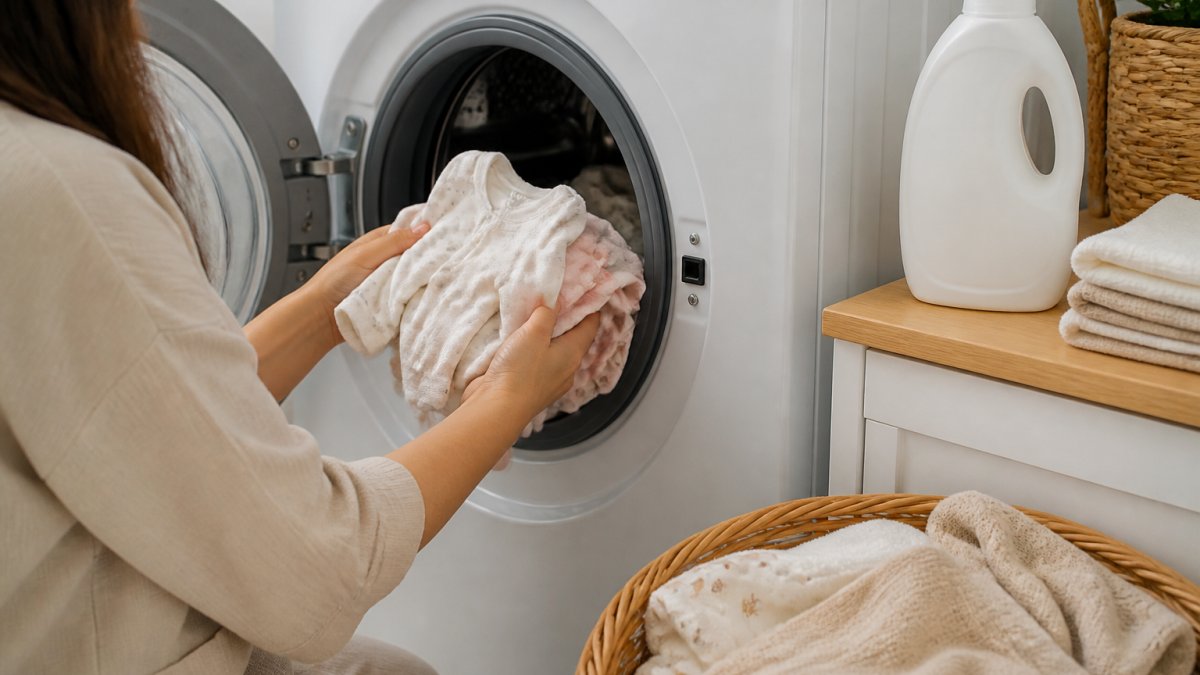
The rinse cycle is critical: a standard rinse may leave residue that transfers to skin during wear. Run an extra rinse (many machines have a "sensitive" or "extra rinse" setting) to remove more soap.
Handling tough stains without harsh chemicals
Babies are messy, milk spit-up, food stains, and diaper leaks are routine. Pre-treat stains with a small amount of detergent mixed with water or a stain stick; apply directly, let sit 15-30 minutes, then wash normally.
Avoid chlorine bleach entirely, it's harsh, damages fabric, and may trigger skin reactions. Oxygen-based bleach alternatives are gentler, and air-drying in direct sunlight fades stains and kills bacteria without chemicals.
What to Look for in a Baby-Safe Laundry Detergent
Fragrance-free versus unscented formulas
Fragrance-free means no added scent compounds at all; unscented means fragrance was added to mask other odors. For truly sensitive skin, fragrance-free is safer, it eliminates an entire category of potential irritants, while unscented products may still contain masked fragrance chemicals.
Fragrance-free clothes smell neutral, not musty. If you prefer a subtle scent, essential-oil-scented products are an option, though even these can trigger sensitivity in some babies.
Hypoallergenic and plant-based options
Hypoallergenic detergents exclude common allergens and irritants, though the term isn't strictly regulated, so standards vary by brand. Plant-based detergents use plant-derived surfactants and are often gentler and more biodegradable, but "plant-based" doesn't automatically mean safer, some plant-derived ingredients still irritate sensitive skin.
Detergent sheets and concentrates reduce packaging waste and make dosing easier, over-dosing is a common mistake that leaves residue, so follow the dosing guide carefully.
Special Considerations for Eczema and Diagnosed Allergies
General sensitive-skin advice and medical guidance aren't the same thing. With eczema, contact dermatitis, or a diagnosed allergy, the goal shifts from "choose a gentle detergent" to "identify and remove specific triggers while supporting the skin barrier."
What the evidence actually supports
Eczema is a barrier-function condition: the skin's outer layer doesn't hold moisture well and is more permeable to irritants. Detergent residue can worsen existing irritation, but it's rarely the sole cause of eczema.
For diagnosed allergies, a true immune response to a specific substance is involved. If your baby is allergic to a detergent ingredient like a preservative or fragrance compound, avoiding it is the core treatment, not optional.
When to consult a pediatrician or dermatologist
See a doctor if:
- A rash persists beyond a few days despite a fragrance-free, dye-free detergent and an extra rinse.
- The rash is weeping, crusting, or infected.
- Your baby is uncomfortable, scratching constantly, or losing sleep.
A dermatologist can perform patch testing to identify specific contact allergens, far more precise than trial-and-error.
A reproducible elimination approach
A structured approach beats random switching. Discuss with your doctor first:
- Baseline week: Wash all baby clothes, bedding, and towels in a fragrance-free, dye-free detergent with an extra rinse. Change nothing else; note skin condition daily.
- One variable at a time: Switch only the suspect product, keeping wash temperature and rinse settings constant.
- Two-week observation: Give each change at least two weeks, reactions take time to appear and resolve.
- Log details: Record detergent name, ingredients, wash settings, and skin observations.
- Reintroduce cautiously: After a clear period, reintroduce the suspect product. If the reaction returns, you have your answer.
This isn't a medical diagnosis, it's information to bring to your doctor.
What not to do
- Don't assume a detergent treats eczema, detergents clean clothes, they don't repair skin barriers.
- Don't use prescription creams as a substitute for removing a known irritant from clothing.
- Don't treat "natural" or "plant-based" labels as proof of safety; some plant-derived ingredients, including certain essential oils, are common contact allergens.
Supporting the skin barrier alongside detergent choices
Detergent choice is one lever. Others:
- Rinse thoroughly: An extra rinse reduces residue, especially important for eczema-prone skin.
- Skip fabric softener and dryer sheets: Both leave waxy or fragranced residue that irritates compromised skin.
- Choose smooth fabrics: Soft cotton is often more comfortable than rough or synthetic blends.
Keeping Your Baby's Clothes Fresh and Clean
A good detergent is only part of the equation, storage and handling matter too.
Store clean clothes in a cool, dry place away from direct sunlight (moisture promotes mold; sun fades colors). Wash new clothes before wearing to remove manufacturing residues, dyes, and finishes. Don't over-wash: babies don't get visibly dirty like older children, so spot-clean small stains and wash only when necessary, frequent washing increases residue buildup.
| Washing Factor | Best Practice | Why It Matters |
|---|---|---|
| Water temperature | Warm or cool, not hot | Protects fabric and prevents stain setting |
| Detergent amount | Follow package guidance; use less in soft water | Excess detergent leaves residue on clothes |
| Rinse cycles | Standard plus one extra | Removes more soap, reduces irritation risk |
| Stain treatment | Pre-treat with diluted detergent, avoid bleach | Prevents need for harsh chemicals |
| Drying method | Air-dry or low heat | Preserves fabric and reduces shrinkage |
Frequently Asked Questions
Is it necessary to use special laundry detergent for babies?
Special baby laundry detergent isn't always necessary, but it's often recommended for newborns and babies with sensitive skin. Regular detergents can leave residue on delicate fabrics and irritate young skin. If your baby has no known sensitivities, a fragrance-free, dye-free regular detergent may work. However, babies under 6 months or those with eczema, contact dermatitis, or diagnosed allergies benefit from hypoallergenic, specially formulated options designed to minimize irritation and skin reactions.
What ingredients should I avoid in baby laundry detergent?
Avoid detergents containing artificial fragrances, dyes, optical brighteners, and harsh surfactants. Common irritants include perfumes (even labeled 'baby fresh'), fabric softeners, bleach, and enzymes that break down stains aggressively. Check ingredient lists for naturally derived formulas or plant-based options, and look for products labeled hypoallergenic. If your baby has diagnosed allergies, review the full ingredient list.
How do I know if my baby has a laundry detergent allergy?
Signs of a detergent reaction include redness, itching, rashes, or hives on areas where clothes contact skin, especially around the neck, armpits, and diaper area. Some babies develop eczema flare-ups or persistent dry patches. If you notice these symptoms after introducing a new detergent, switch back to your previous product and watch for improvement over 2-3 days. If symptoms persist or worsen, consult your pediatrician. To identify the culprit, change one laundry product at a time and allow several washes before introducing another change.
What is the best way to wash baby clothes to prevent skin irritation?
Use warm or cool water (not hot) and run an extra rinse cycle to remove all detergent residue. Wash new clothes before wearing them to eliminate manufacturing chemicals. Use the recommended detergent dose, too much leaves buildup that irritates skin. Separate baby clothes from adult items when possible, and avoid fabric softeners and dryer sheets. For tough stains like milk or food, pre-treat with cold water or a small amount of gentle detergent before washing. Dry on low heat or air-dry to preserve fabric integrity and reduce chemical exposure from heat.
Choosing the right laundry detergent is one of the simplest ways to protect your baby's skin and extend the life of the clothes you've carefully selected. A gentle, fragrance-free formula combined with proper washing technique prevents irritation and keeps your child comfortable. When you invest in quality kids' clothing from Walabookies, caring for those pieces with the right detergent ensures they look and feel great wash after wash, and that your little one stays happy and rash-free.